Quick Verdict
FSP v2.1 Verdict — REV-2026-059
Good ingredients on paper. Zero transparency on doses. At $2.30 a night, that's a problem.
YuSleep contains a genuinely interesting ingredient combination — L-theanine, magnesium glycinate, apigenin, 5-HTP, and melatonin at a sensibly low 0.9 mg. Each ingredient has clinical literature behind it at the right dose. The problem is that "at the right dose" qualifier: YuSleep discloses doses for exactly one of its ten ingredients (melatonin). The other nine are listed with no quantity. There is no supplement facts panel on their website. No third-party certification. And a marketing claim — "nano-enhanced" — that they never explain. For a product priced at premium tier, the opacity is inexcusable.
What Is YuSleep?
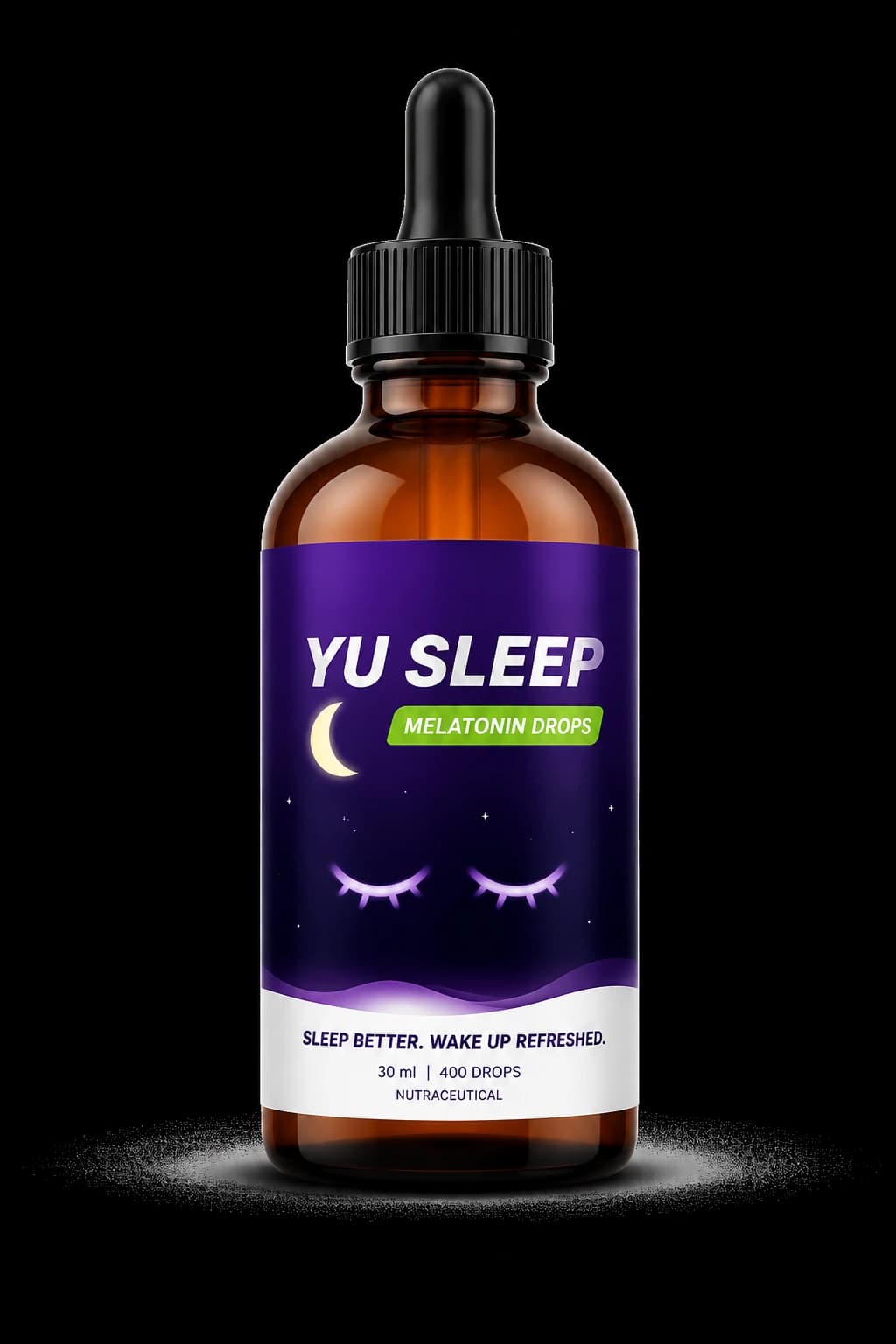
YuSleep is a liquid sleep supplement sold as "nano-enhanced sleep drops." You take two droppers 30 minutes before bed. The formula contains ten ingredients including melatonin (0.9 mg — the only dose disclosed), L-theanine, magnesium glycinate, apigenin, 5-HTP, lemon balm extract, GABA, red tart cherry extract, and vitamins B6 and B2.
The brand targets common sleep complaints: difficulty falling asleep, frequent night waking, and non-restorative sleep. Its marketing positions the product as working with the body's natural circadian rhythm rather than knocking you out artificially — a reasonable framing given the ingredient list.
The "nano-enhanced" descriptor is applied across all marketing materials without explanation. In supplement science, nano-emulsification refers to reducing active compounds to nano-scale droplets for faster absorption — a real technology used in some pharmaceutical and nutraceutical formulations. Whether YuSleep uses this technology, and whether it applies to their specific ingredients, is never stated.
Who makes YuSleep?
YuSleep is sold via getyusleep.com. The company behind the brand is not prominently disclosed on the product page. No parent company, manufacturing facility, or GMP certification is referenced. This is consistent with the broader transparency issues throughout the product's marketing.
Score Breakdown
FSP v2.1 composite score: 3.1 / 10 (weighted pillars minus red flag deductions). Editorial score: 4 / 10. Scores are set independently — composite reflects the algorithmic weighting, editorial reflects our overall assessment.
Red & Green Flags
Supplement Facts
Serving size: 2 droppers (approx. 1 ml). Based on publicly available information as of May 2026.
YuSleep does not publish a supplement facts panel on their website. The only disclosed dose is melatonin (0.9 mg). All other ingredient amounts are unknown. The table below reflects what is and is not disclosed — not inferred estimates.
| Ingredient | Amount / Serving | Clinical Range |
|---|---|---|
| Melatonin | 0.9 mg | 0.5–1 mg |
| L-Theanine | Undisclosed | 100–400 mg |
| Magnesium Glycinate | Undisclosed | 200–400 mg |
| Apigenin | Undisclosed | 50 mg |
| 5-HTP | Undisclosed | 50–300 mg |
| GABA | Undisclosed | 100–300 mg |
| Lemon Balm Extract | Undisclosed | 300–600 mg |
| Red Tart Cherry Extract | Undisclosed | 480 mg (480 mg/d study) |
| Vitamin B6 (Pyridoxine) | Undisclosed | 1.3–2 mg (RDA) |
| Vitamin B2 (Riboflavin) | Undisclosed | 1.1–1.3 mg (RDA) |
Clinical ranges based on published human trials. "Undisclosed" = not found on product page or label as of May 2026.
Ingredient Breakdown
Each ingredient is assessed on evidence quality and typical clinical dose — not on YuSleep's formula specifically, since doses are undisclosed.
Melatonin — 0.9 mg
●●●Strong EvidenceBest-dosed ingredient in the formula
Most supplement brands use 5–10 mg melatonin, creating a pharmacological rather than physiological effect. Brzezinski et al. (2005) demonstrated that 0.5–1 mg produces blood levels consistent with natural nocturnal secretion. Ferracioli-Oda et al. (2013) meta-analysis confirmed low-dose melatonin reduces sleep latency and improves quality without the next-morning impairment common at high doses. YuSleep's 0.9 mg is the one thing they got right on the label.
L-Theanine — Undisclosed
●●○Moderate EvidenceEvidence-backed — but dose matters enormously
L-theanine promotes alpha brainwave activity and reduces subjective anxiety without sedation. Lyon et al. (2011) found 200 mg/day improved sleep quality in boys with ADHD; Hidese et al. (2019) showed 200–400 mg reduced stress and improved sleep quality in adults. At 50 mg it is largely ineffective. At 200 mg it is meaningful. YuSleep discloses nothing, so this could be either.
Magnesium Glycinate — Undisclosed
●●○Moderate EvidenceSolid choice of form — unknown quantity
Glycinate is the best-absorbed form of magnesium for sleep purposes. Abbasi et al. (2012) found 500 mg magnesium supplementation significantly improved insomnia scores, sleep efficiency, and early morning waking in elderly insomniacs. Typical effective range is 200–400 mg elemental magnesium as glycinate. Without a disclosed dose, we cannot assess whether YuSleep's contribution is clinically meaningful.
Apigenin — Undisclosed
●●○Moderate EvidenceMechanistically plausible, human data limited
Apigenin binds the GABA-A receptor benzodiazepine site (Avallone et al., 2000), which explains anxiolytic and mild sedative effects. It is the active compound responsible for chamomile's sleep benefits. Human RCT data is limited — most evidence is from in vitro, animal, or chamomile tea studies. Huberman Lab popularised 50 mg as a dose. YuSleep's amount is unknown.
5-HTP — Undisclosed
●●○Moderate EvidenceEffective but carries meaningful interaction risks
5-hydroxytryptophan is a precursor to serotonin, which converts to melatonin in the pineal gland. Birdsall (1998) reviewed 5-HTP's role in improving sleep quality, particularly REM sleep. Effective doses range from 50–300 mg. However, 5-HTP carries a real risk of serotonin syndrome if combined with SSRIs, MAOIs, or triptans. This risk is non-trivial and the undisclosed dose makes it impossible for consumers or doctors to evaluate the interaction.
GABA — Undisclosed
●○○Limited EvidenceLimited CNS penetration from oral supplementation
GABA is the primary inhibitory neurotransmitter. The question is whether orally supplemented GABA crosses the blood-brain barrier in meaningful quantities. Hepsomali et al. (2020) reviewed available human data and found modest but inconsistent sleep and anxiety benefits at 100–300 mg. Pharma-GABA (naturally fermented) may have slightly better bioavailability than synthetic. YuSleep does not specify which form or what dose.
Lemon Balm Extract — Undisclosed
●●○Moderate EvidenceReduces cortisol, supports relaxation
Lemon balm (Melissa officinalis) inhibits GABA transaminase, slowing GABA breakdown. Cases et al. (2011) found 600 mg significantly reduced insomnia severity and anxiety. Müller and Klement (2006) showed improved sleep quality in children at 160 mg combined extract. Effective in the 300–600 mg range. Unknown if YuSleep meets this threshold.
Red Tart Cherry Extract — Undisclosed
●●○Moderate EvidenceNatural melatonin source with RCT support
Tart cherry contains naturally occurring melatonin, anthocyanins, and tryptophan. Pigeon et al. (2010) showed tart cherry juice reduced insomnia severity. Howatson et al. (2012) found 480 mg of concentrate significantly increased melatonin levels and improved sleep duration and quality in healthy adults. The clinical dose (480 mg) is specific — without label disclosure, we can't verify attainment.
Vitamins B6 & B2 — Undisclosed
◐○○Emerging ResearchCofactors for melatonin synthesis — correct rationale
Vitamin B6 (pyridoxine) is a cofactor in the conversion of tryptophan → 5-HTP → serotonin → melatonin. Clayton (2010) documented B6's role in this pathway. B2 (riboflavin) supports mitochondrial function and circadian entrainment. Including both makes mechanistic sense for a sleep formula, and the RDA doses needed are small (1–2 mg each). These are likely to be adequately dosed even in a small-volume liquid.
Lab & Verification
No Third-Party Verification Found
As of May 2026, YuSleep holds no NSF Certified for Sport, Informed Choice, Informed Sport, USP Verified, or BSCG certification. No certificate of analysis (COA) for heavy metals, microbials, or ingredient identity is published or linked on their website. The brand cites 20 PubMed references on their page — but citing external research is different from having your actual product independently tested.
Claim Audit
How to Take It
Brand Protocol
Take 2 droppers, 30 minutes before bed.
The brand does not specify whether to take it sublingually (under the tongue), mixed into water, or swallowed directly. This matters for absorption — sublingual delivery bypasses first-pass digestion and may be relevant to the "nano-enhanced" claim. No guidance is given.
What the evidence actually supports
- Melatonin: take 30–60 min before target sleep time. Timing matters more than dose for circadian effect.
- L-Theanine: can be taken within 30 min of sleep. Acute anxiolytic effect. Non-sedating on its own.
- Magnesium glycinate: accumulates over days — daily consistency matters more than exact timing.
- 5-HTP: take with or without food, 30–60 min before bed. Avoid combining with antidepressants.
- GABA + Lemon Balm: best taken on an empty stomach or with light carbohydrates for CNS effect.
vs. Competitors
| Product | Form | Key Actives | Doses Disclosed? | 3rd-Party | $/Serving |
|---|---|---|---|---|---|
| YuSleep | Liquid drops | Melatonin, L-Theanine, Mag Glycinate, Apigenin, 5-HTP | No (1 of 10) | None | $2.30 |
| Luna (Nested Naturals) | Capsules | Melatonin 6mg, L-Theanine 100mg, Mag 200mg, Valerian | Yes — full | None listed | $0.50 |
| Performance Lab Sleep | Capsules | Tart Cherry 500mg, Mag 100mg, L-Theanine 100mg | Yes — full | Informed Sport | $1.40 |
| Natrol Advanced Sleep | Tablets | Melatonin 10mg, L-Theanine 200mg, Valerian 100mg | Yes — full | None listed | $0.30 |
| OLLY Sleep | Gummies | Melatonin 5mg, L-Theanine 100mg, Botanicals | Partial | None listed | $0.50 |
Prices verified May 2026 at best available single-purchase price. YuSleep's discounted 2-month pack price used ($138 ÷ 60 servings).
Takeaway
Every main competitor publishes full or partial dose information. Performance Lab Sleep is the closest premium alternative with transparent dosing and Informed Sport certification at $1.40/serving — still expensive but justifiably so. Luna offers a transparent, well-dosed capsule at $0.50/serving. YuSleep's liquid format is a genuine differentiator, but at 4–5× the per-serving cost of transparent alternatives and with no disclosed doses, the premium is unjustifiable on current evidence.
Products at a Glance
Pros & Cons
Strengths
- Melatonin dosed at 0.9 mg — physiological, not pharmacological
- Strong ingredient selection: L-theanine, magnesium glycinate, apigenin, and 5-HTP each have clinical backing
- Liquid format may offer faster absorption than capsules
- 60-day money-back guarantee reduces purchase risk
- B6 and B2 included as cofactors for melatonin synthesis — mechanistically sound
- Ships within 24 hours with straightforward dosing protocol
Limitations
- 9 of 10 ingredient doses are completely undisclosed — major transparency failure
- No supplement facts panel published anywhere on the website
- 'Nano-enhanced' claim is marketing language with no supporting explanation or data
- No third-party testing (NSF, Informed Choice, USP, Informed Sport, COA)
- $2.30/serving — 3–4× more expensive than transparent alternatives with full labels
- Review count of 36,498+ cannot be independently verified on any third-party platform
- No manufacturer or company information disclosed on the website
- 5-HTP interaction risks cannot be properly assessed without dose disclosure
Safety & Side Effects
At typical clinical doses, most of YuSleep's ingredients are well-tolerated. The undisclosed doses introduce uncertainty — both about efficacy and about safety in sensitive populations.
Combining 5-HTP with SSRIs, MAOIs, or serotonergic triptans can cause serotonin syndrome — a potentially life-threatening condition characterised by agitation, tremor, hyperthermia, and tachycardia. Do not take YuSleep alongside any serotonergic medication without consulting a doctor. This interaction risk applies regardless of dose.
GABA supplementation may potentiate the effects of benzodiazepines, alcohol, and other CNS depressants. Sedation can be additive. Avoid combining with these substances.
Melatonin has immunomodulatory effects and may interact with cyclosporin, warfarin, and fluvoxamine. At 0.9 mg this risk is low, but individuals on these medications should consult a physician.
Insufficient safety data exist for 5-HTP, lemon balm extract, and several other YuSleep ingredients during pregnancy or lactation. Avoid use unless specifically approved by your obstetrician.
At 0.9 mg, melatonin is unlikely to cause next-morning impairment. However, GABA and lemon balm at higher-than-typical doses can extend sedation. Since doses are unknown, report any morning sedation and adjust timing.
Price & Value
Pricing by Package — Prices verified May 2026
| Package | Total Price | Per Bottle | Per Serving | Savings |
|---|---|---|---|---|
| 2-Month (2 bottles) | $138 | $69.00 | $2.30 | Save $60 (30% off) |
| 3-Month (3 bottles) | $177 | $59.00 | $1.97 | Save $120 (40% off) |
| 6-Month (6 bottles) | $294 | $49.00 | $1.63 | Save $300 (50% off) |
Original (single-bottle) price not listed on website at time of review. Multi-pack discounts are shown as savings off the "original" price, which may be an artificially high anchor.
Where to Buy
Official Channel
From $49.00 / bottle (6-month pack)
60-day money-back guarantee · Ships within 24 hours · Prices verified May 2026.
Retailer note: YuSleep appears to be sold exclusively through its own website and affiliate channels. It is not currently listed on Amazon, and no physical retail distribution was found. Purchasing exclusively through one channel means no independent price comparison and no platform-based buyer protection (such as Amazon A-to-Z guarantee). Retain your order email and payment record if you intend to use the 60-day return policy.
FAQ
Final Verdict
FSP v2.1 Final Score
Interesting idea. Not enough transparency to recommend.
YuSleep is built on a genuinely thoughtful ingredient selection. The 0.9 mg melatonin dose is correct. The inclusion of L-theanine, magnesium glycinate, apigenin, and 5-HTP shows someone with knowledge of the sleep supplement space put this formula together. If those ingredients are present at clinical doses, this could be an effective product.
But "could be" is not a standard that justifies $2.30/serving. The decision to withhold supplement facts, use undefined marketing terminology ("nano-enhanced"), and make no third-party testing available means that buyers have no way to verify what they're actually purchasing. That's not a minor oversight — it's a fundamental failure of consumer transparency.
If YuSleep published a full supplement facts panel and secured a third-party certification, this review would look significantly different — the melatonin dose alone is more correctly calibrated than most of the category. Until then, weigh the transparency gap against the price. If dose disclosure is the deciding factor for you, see Performance Lab Sleep or Nested Naturals Luna, both of which disclose every dose.
Not sure a supplement is even the right first move? Our complete guide to sleeping better at night covers the sleep-hygiene changes that outperform any supplement on their own — worth reading before you buy anything.
Check Current PriceResearch References
- Brzezinski A et al. (2005). Effects of exogenous melatonin on sleep: a meta-analysis. Sleep Medicine Reviews, 9(1):41–50. doi →
- Ferracioli-Oda E, Qawasmi A, Bloch MH. (2013). Meta-analysis: melatonin for the treatment of primary sleep disorders. PLOS ONE, 8(5):e63773. doi →
- Lyon MR, Kapoor MP, Juneja LR. (2011). The effects of L-theanine (Suntheanine®) on objective sleep quality in boys with attention deficit hyperactivity disorder. Alternative Medicine Review, 16(4):348–354. doi →
- Hidese S et al. (2019). Effects of L-theanine administration on stress-related symptoms and cognitive functions in healthy adults. Nutrients, 11(10):2362. doi →
- Abbasi B et al. (2012). The effect of magnesium supplementation on primary insomnia in elderly: a double-blind placebo-controlled clinical trial. Journal of Research in Medical Sciences, 17(12):1161–1169. doi →
- Avallone R et al. (2000). Pharmacological profile of apigenin, a flavonoid isolated from Matricaria chamomilla. Biochemical Pharmacology, 59(11):1387–1394. doi →
- Birdsall TC. (1998). 5-Hydroxytryptophan: a clinically-effective serotonin precursor. Alternative Medicine Review, 3(4):271–280. doi →
- Hepsomali P et al. (2020). Effects of oral gamma-aminobutyric acid (GABA) administration on stress and sleep in humans: a systematic review. Frontiers in Neuroscience, 14:923. doi →
- Cases J et al. (2011). Pilot trial of Melissa officinalis L. leaf extract in the treatment of volunteers suffering from mild-to-moderate anxiety disorders and sleep disturbances. Mediterranean Journal of Nutrition and Metabolism, 4(3):211–218. doi →
- Howatson G et al. (2012). Effect of tart cherry juice (Prunus cerasus) on melatonin levels and enhanced sleep quality. European Journal of Nutrition, 51(8):909–916. doi →
- Pigeon WR et al. (2010). Effects of a tart cherry juice beverage on the sleep of older adults with insomnia: a pilot study. Journal of Medicinal Food, 13(3):579–583. doi →
- Clayton PT. (2010). B6-responsive disorders: a model of vitamin dependency. Journal of Inherited Metabolic Disease, 29(2–3):317–326. doi →