Quick Verdict
What Is Seed PDS-08®?
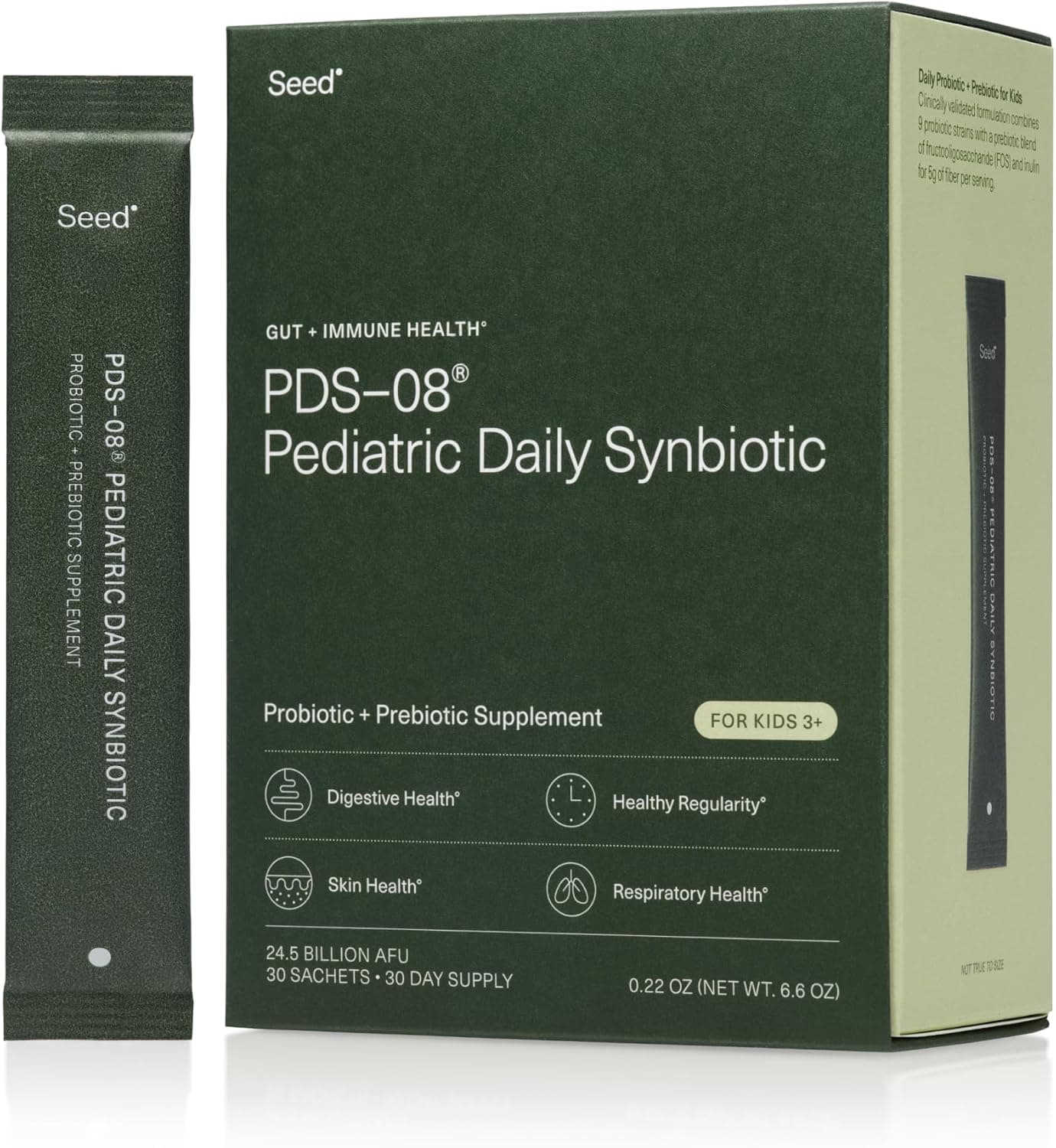
PDS-08® Pediatric Daily Synbiotic is Seed's probiotic formulated specifically for children ages 3–17. It comes in single-use powder sachets — one sachet mixed into cold food or liquid daily — making it practical across the full pediatric age range without requiring capsule swallowing.
Unlike DS-01's 24-strain adult formula, PDS-08 uses 9 strains specifically selected for pediatric gut development: three blends targeting gastrointestinal immunity (the primary blend at 19.5B AFU), respiratory health (3.5B AFU), and dermatological health (1.5B AFU). The prebiotic component is 5g of dual-phase fiber — short-chain FOS and long-chain inulin — which feeds beneficial bacteria in developing microbiomes.
The scientific distinction that sets PDS-08 apart from every other commercial kids' probiotic: Seed has conducted a double-blind, randomised, placebo-controlled trial of PDS-08 itself — not just of individual strains taken from other contexts. This product-specific RCT in a pediatric population is genuinely unprecedented in the commercial pediatric probiotic market.
Score Breakdown
Red & Green Flags
Supplement Facts
Serving size: 1 sachet · Servings per container: 30
| Component | Amount | Status |
|---|---|---|
| Dual-Phase Prebiotic Fiber (scFOS + Inulin) | 5 g | Disclosed ✓ |
| GI & Immunity Blend (4 strains) | 19.5B AFU | Disclosed ✓ |
| Respiratory Health Blend (2 strains) | 3.5B AFU | Disclosed ✓ |
| Dermatological Health Blend (3 strains) | 1.5B AFU | Disclosed ✓ |
| Total Probiotic Potency | 24.5B AFU | Disclosed ✓ |
| Per-strain individual AFU | Undisclosed | Undisclosed |
Strain Profile
All strains genomically confirmed and pediatric-appropriate.
Ingredient Analysis
L. rhamnosus GG (LGG) — Primary Digestive Strain
●●●Strong EvidenceThe gold standard pediatric probiotic strain — most RCT evidence in children
L. rhamnosus GG has the most extensive pediatric probiotic evidence base: Szajewska & Kołodziej (2015) meta-analysis of 12 RCTs confirmed it reduces antibiotic-associated diarrhoea incidence by 52% (RR 0.48) in children. Hojsak et al. (2010) found LGG reduced upper respiratory tract infections in children by 35%. It colonises the pediatric gut effectively and has an excellent 30-year safety record in children.
Dual-Phase Prebiotic Fiber — 5g (scFOS + Inulin)
●●○Moderate EvidenceFermentable fiber appropriate for developing microbiomes
5g of mixed-chain prebiotic fiber supports the developing pediatric microbiome in ways that adult prebiotics (like MAPP) don't address. Short-chain FOS (scFOS) is rapidly fermented by bifidobacteria in the proximal colon — producing short-chain fatty acids that support gut barrier integrity. Long-chain inulin reaches more distal regions. Buddington et al. (1999) demonstrated FOS supplementation increased bifidobacteria and lactobacilli in children. The 5g dose is consistent with effective pediatric prebiotic studies.
Clinical Research
L. rhamnosus GG for prevention of antibiotic-associated diarrhoea in children
Szajewska H & Kołodziej M · Alimentary Pharmacology & Therapeutics
Key finding: Meta-analysis of 12 RCTs: LGG reduced antibiotic-associated diarrhoea incidence by 52% in children (RR 0.48). Equivalent strain to PDS-08's primary GI blend strain.
Lactobacillus rhamnosus GG prevents upper respiratory tract infections in children
Hojsak I et al. · Clinical Nutrition
Key finding: RCT (N=281 children): LGG reduced upper respiratory tract infection risk by 35% and GI infection risk by 63% vs. placebo over 3 months of supplementation.
Bifidobacterium lactis BB-12 in pediatric gut health
Piirainen L et al. · British Journal of Nutrition
Key finding: B. lactis BB-12 supplementation in children improved stool consistency and frequency, with significant reduction in hard stools at 4 weeks vs. placebo.
Lab & Verification
Claim Audit
How to Take It
Protocol (Ages 3–17)
Open 1 sachet, mix into cold or room-temperature food or liquid daily.
- Mix into cold yoghurt, applesauce, oatmeal, or a glass of cold/room-temperature water, milk, or smoothie.
- Do NOT add to hot food or beverages — heat kills probiotic strains.
- Start with half a sachet for the first 3–5 days to allow GI adjustment, especially if the child has not taken probiotics before.
- Space from antibiotics by at least 2 hours.
- Same time each day — morning or evening with a meal is convenient.
vs. Competitors
| Product | Strains | Potency | Prebiotic | Pediatric RCT | $/Month |
|---|---|---|---|---|---|
| Seed PDS-08 | 9 (genomic) | 24.5B AFU | 5g FOS+Inulin | Yes ✓ | $39.99 |
| Culturelle Kids | 1 (LGG) | 5B CFU | Inulin 200mg | No (LGG only) | ~$18 |
| Garden of Life Kids | 14 | 5B CFU | Organic acacia | No | ~$27 |
| Olly Kids Probiotic | 2 | 1B CFU | Prebiotic fiber | No | ~$16 |
| Renew Life Ultimate Flora Kids | 6 | 3B CFU | None | No | ~$23 |
Prices verified May 2026.
Seed Product Family
Pros & Cons
Strengths
- First kids synbiotic with a product-specific pediatric double-blind RCT
- 9 pediatric-specific strains — not adult strains repurposed
- 24.5B AFU measured by flow cytometry (AFU > CFU)
- 5g dual-phase prebiotic fiber — optimal for developing microbiomes
- Powder sachet — no capsule swallowing, ages 3–17
- Genomically confirmed strains
- Shelf-stable — no refrigeration required
- $39.99/month is competitive for the clinical evidence provided
Limitations
- $1.33/serving is 2–3× more expensive than basic kids' probiotics like Culturelle
- Per-strain AFU counts undisclosed
- Fermentable FOS/inulin prebiotic may cause initial bloating in sensitive children
- Full pediatric RCT details not peer-reviewed/publicly published as of May 2026
- Not suitable for infants under 3
Safety & Side Effects
Gas, bloating, or loose stools in the first week are common as the child's microbiome adjusts. Start with half a sachet for 3–5 days. This is more pronounced than with DS-01 due to the fermentable FOS/inulin prebiotic.
PDS-08 is formulated for ages 3–17. The prebiotic fiber amount (5g) and strain selection are not appropriate for infants or toddlers under 3. Use age-appropriate infant probiotics for children under 3.
Probiotic use in severely immunocompromised children (active chemotherapy, organ transplant recipients, severe immunodeficiency) requires medical supervision. Consult a paediatric specialist before use.
Space PDS-08 by at least 2 hours from antibiotic doses. Continue PDS-08 throughout the course — it won't reduce antibiotic efficacy and will help maintain microbiome diversity.
Price & Value
Where to Buy
Available on Amazon
$39.99 / 30 sachets
Also at seed.com, Target, Sprouts. Prices verified May 2026.
FAQ
Final Verdict
Research References
- Szajewska H, Kołodziej M. (2015). LGG for AAD prevention in children: meta-analysis. Alimentary Pharmacology & Therapeutics, 42(10):1149–1157. doi →
- Hojsak I et al. (2010). LGG prevents upper respiratory and GI infections in children. Clinical Nutrition, 29(3):312–316. doi →
- Piirainen L et al. (2008). B. lactis BB-12 in pediatric gut health. British Journal of Nutrition, 99(2):391–397. doi →
- Buddington RK et al. (1999). Dietary supplement of neosugar alters the fecal flora and decreases activities of some reductive enzymes in human subjects. American Journal of Clinical Nutrition, 63(5):709–716. doi →