Quick Verdict · REV-2026-044
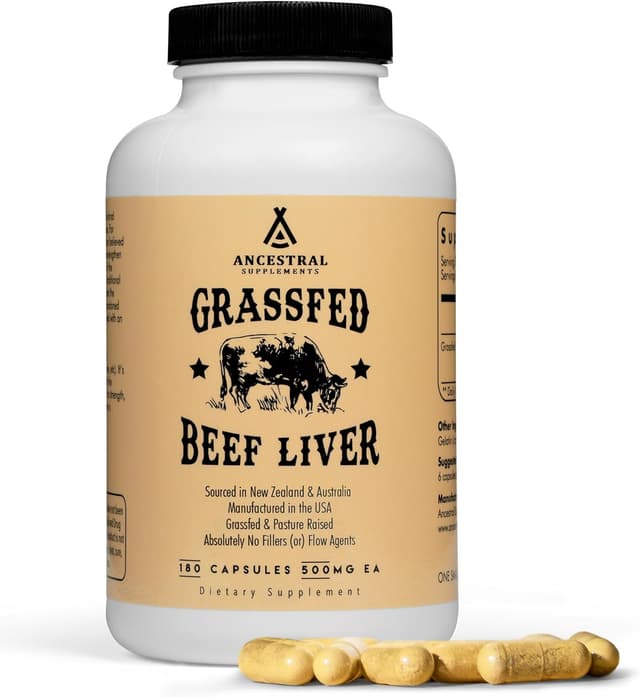
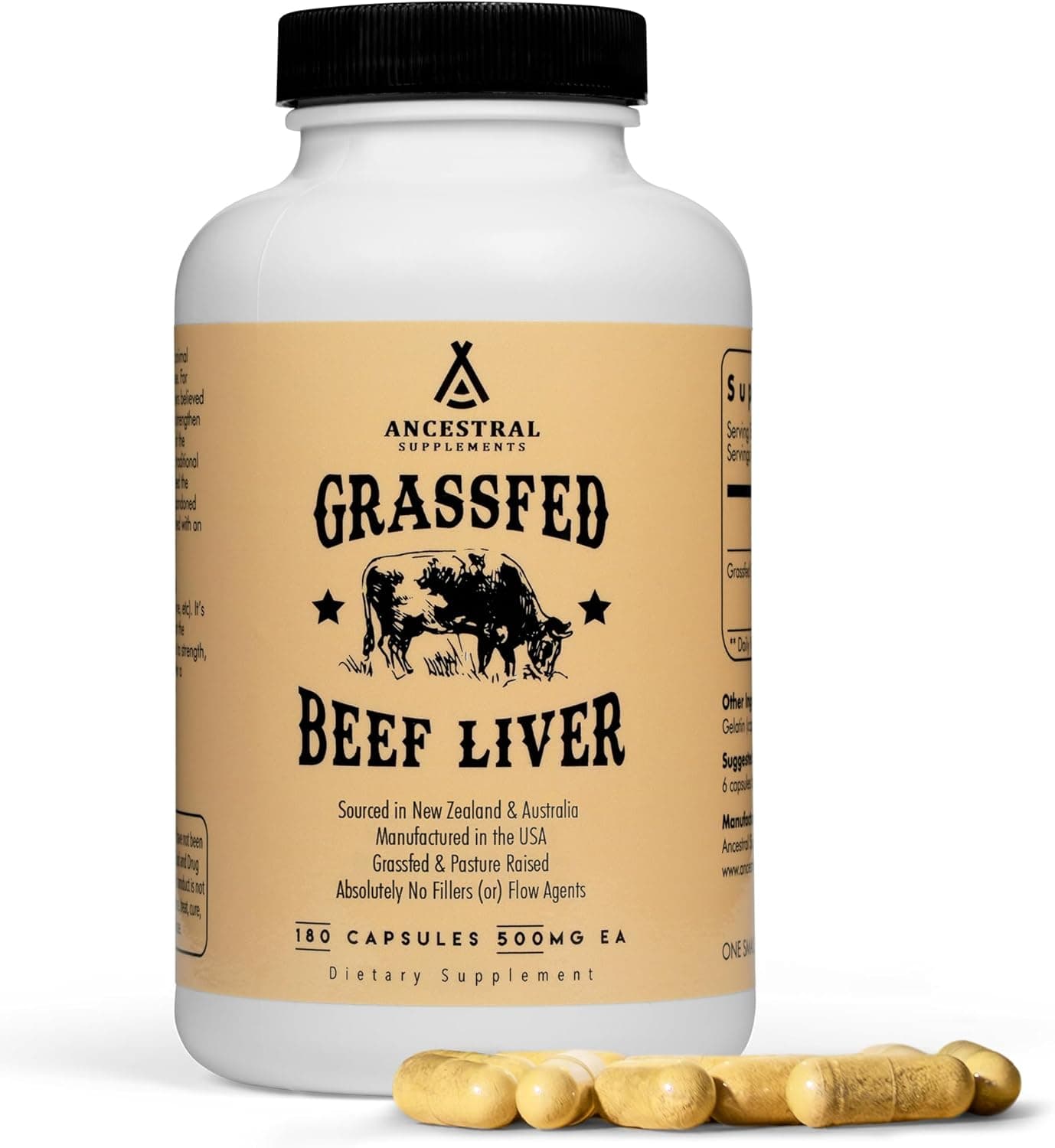
The sourcing and processing are genuinely excellent — New Zealand grass-fed, grass-finished beef liver, freeze-dried below body temperature, with zero additives. For a whole-food organ supplement, it is hard to do better on the formulation side.
The honest limitation: six capsules give you roughly the nutritional equivalent of 15–18g of fresh liver. A meaningful amount, but not a replacement for actually eating liver. At $43–47 per bottle, you are paying a significant premium over the real thing. That premium is justified if you genuinely will not eat liver. If you will, a grass-fed liver from a butcher is cheaper and more effective.
Why Liver. Why Capsules.
Beef liver is not a trendy superfood. It is, by USDA nutrient database rankings, one of the most nutrient-dense foods humans have access to. Per 100g it delivers more B12 than almost any other food, more preformed Vitamin A than anything except cod liver oil, substantial copper, heme iron, CoQ10, choline, and folate — all in highly bioavailable forms. Our ancestors did not waste the organ meats. Modern diets almost exclusively do.
The reason most people stopped eating liver is sensory, not rational. Raw liver smells. Cooked liver has a texture and taste that most people raised on processed food find difficult. Ancestral Supplements recognised this gap and built a business on it: freeze-dry the liver at low temperature, encapsulate it, and sell it to people who want the nutrition without the experience.
The product works as described. The question is whether the cost is reasonable for what you get — and that depends entirely on whether your alternative is eating real liver or taking nothing.
Why freeze-dried over desiccated
Desiccation uses heat (typically 50–70°C) to drive off moisture. Freeze-drying removes moisture under vacuum at temperatures as low as −50°C, then gradually warms to no higher than body temperature (~37°C). This matters for heat-sensitive nutrients — CoQ10, certain B vitamins, and enzymes degrade measurably under conventional drying heat. Freeze-dried liver retains more of these compounds. It is a meaningful difference, not a marketing distinction, and it is reflected in the price.
FSP Score Breakdown
FSP v2.1 composite: 8.02/10 → editorial score: 8/10. Weighting: Formula 35% · Transparency 25% · Verification 20% · Value 12% · Practical 8%.
Red & Green Flags
Supplement Facts
Key Nutrients — What You Are Actually Getting
Approximate values per 6-capsule serving (3,000mg freeze-dried liver ≈ 15–18g fresh liver). Based on USDA FDC #174489 adjusted for freeze-drying concentration factor.
Values are estimates based on USDA FDC #174489 (raw beef liver) adjusted for freeze-drying concentration. Actual values vary by batch and animal.
Sourcing & Processing
New Zealand — why it matters
New Zealand's livestock industry operates under the Animal Products Act 1999 and MPI regulations that prohibit the use of growth hormones and require substantial pasture access. Grass-finishing (no grain feedlot period before slaughter) is standard practice for NZ beef, not an exception. This is meaningful — grass-finished liver has a meaningfully different fatty acid profile, including higher CLA and omega-3 concentrations compared to grain-finished livestock.
Grass-Fed vs Grass-Finished
These are not the same thing. 'Grass-fed' in the US can mean the animal ate grass at some point. 'Grass-finished' means the animal ate nothing but pasture until slaughter. Ancestral Supplements specifically states grass-fed and grass-finished. In New Zealand this is the norm, not a premium distinction — but it is worth knowing what you are paying for.
Freeze-drying process
The liver is processed fresh, never frozen first (freezing before freeze-drying can damage cell structure). It goes directly into the freeze-dryer where pressure is reduced and moisture sublimates from solid to gas at temperatures kept below 37°C. The result is a shelf-stable powder with roughly 5–6× the nutrient concentration of fresh liver by weight. This is why 3,000mg of freeze-dried liver is nutritionally meaningful despite being a small physical mass.
Lab Data & Verification
For organ supplements, heavy metal testing is the critical verification — not Informed Choice or NSF, which are relevant for sport-banned substances. Liver concentrates environmental contaminants. You want documented testing.
Tested
Below action level
Tested
Below action level
Tested
Below action level
Tested
Below action level
Not available
Email brand for COA
N/A
Not relevant for organ supps
How to get the COA: Email support@ancestralsupplements.com with your lot number (printed on the bottle bottom). The brand responds within 1–2 business days. This is the standard process — it is not a red flag, but it is less convenient than a label QR code.
Marketing Claim Audit
How to Take It
Starting dose
Begin with 3 capsules per day for the first week. Some people experience digestive adjustment — mild nausea or loose stools — when introducing concentrated organ meat. This usually resolves in 5–7 days. Starting at half the serving limits this.
Full dose
6 capsules per day, as the label states. Split them: 3 with breakfast, 3 with lunch or dinner. Taking all 6 at once on an empty stomach is the most common cause of reported nausea.
Timing
With food, always. Fat-soluble vitamins (A, K2) require dietary fat for absorption. A meal that contains any fat — eggs, avocado, olive oil — is sufficient. Do not take fasted.
With other supplements
If you take a multivitamin that contains Vitamin A or retinol, add those amounts together before assessing your daily intake against the 10,000 IU/day upper limit. Also relevant: cod liver oil and vitamin A drops. Vitamin D has a protective interaction with Vitamin A toxicity at high doses — adequate D intake reduces risk.
Cycling
Not required. Daily use is appropriate and mirrors what you would get eating liver 2–3 times per week as a food. If you are eating liver regularly as food, you may not need the supplement at all.
vs. Competitors
The desiccated/freeze-dried liver supplement market is small but competitive. Key differences are sourcing, processing method, and whether the brand publishes testing data.
| Ancestral Supps | Dr. Ron's Ultra-Pure | Perfect Supplements | Carlson Desiccated | |
|---|---|---|---|---|
| FSP Score | 8/10 ★ | 7.5/10 | 7/10 | 6.5/10 |
| Processing | Freeze-dried | Desiccated (heat) | Freeze-dried | Desiccated (heat) |
| Source country | New Zealand | United States | Brazil | Argentina |
| Grass-finished | Yes (verified) | Yes (claimed) | Yes (claimed) | Yes (claimed) |
| Serving size | 3,000mg / 6 caps | 2,400mg / 4 tabs | 2,000mg / 4 caps | 2,500mg / 5 tabs |
| Heavy metal test | COA on request | Limited disclosure | Claims tested | No public COA |
| Price / 30 sv (USD) | $43–47 | $40–45 | $28–34 | $25–30 |
| Available in USA | Amazon.in | No | No | Amazon.in (limited) |
| Capsule type | Bovine gelatin | Compressed tablet | Bovine gelatin | Compressed tablet |
Prices verified May 2026 on Amazon US. USA prices add 15–30% due to import duties. Competitor data based on published label information.
Products at a Glance
Buy cards for the main organ supplements in this comparison — prices verified May 2026.
Pros & Cons
Strengths
- Single ingredient — no fillers, no excipients whatsoever
- New Zealand grass-fed, grass-finished — verifiable and regulated sourcing
- Freeze-dried at ≤37°C — better nutrient preservation than heat desiccation
- Heavy metal testing conducted (lead, cadmium, arsenic, mercury)
- No taste or smell — removes the biggest barrier to eating liver
- Room temperature stable, travel-friendly, 18-month shelf life
- No recall history, no FDA warning letters since 2016
Limitations
- Six capsules per serving — high cap burden, especially for supplement-heavy users
- Batch COA requires email request — not accessible at point of purchase
- Expensive vs eating real grass-fed liver from a butcher
- USA pricing inflated by 15–30% due to import duties
- Not suitable for pregnant women without medical guidance (retinol load)
- 3,000mg ≈ only 15–18g fresh liver — below a real food serving
Safety & Vitamin A — The Actual Conversation
This is the section most organ supplement reviews skip. It should not be skipped.
Vitamin A Upper Limit: Know This Before You Start
The tolerable upper intake level (UL) for preformed Vitamin A (retinol) is 10,000 IU/day (3,000 mcg RAE) for adults, set by the Institute of Medicine. At 6 capsules of Ancestral Supplements, you are consuming an estimated 1,000–2,500 mcg RAE from this supplement alone.
That is 33–83% of the upper limit from one supplement. Add a multivitamin with Vitamin A, any fortified foods (breakfast cereals, dairy), or other liver-based products, and you can approach or exceed the UL. This does not mean the product is dangerous at standard dosing — it means you need to be aware of your total retinol intake, not just from this bottle.
At 6 caps/day: safe for most healthy adults
The estimated retinol from one serving (1,000–2,500 mcg RAE) keeps most people below the UL when combined with a normal diet. Chronic toxicity from preformed Vitamin A (hypervitaminosis A) requires sustained intake above the UL for months, not occasional excess.
Pregnancy: specific contraindication
Preformed retinol is teratogenic at high doses. The NHS, WHO, and ACOG all specifically warn against high-dose liver supplements during pregnancy. This is not a liver-brand-specific warning — it applies to all concentrated retinol sources. If pregnant or planning pregnancy, discuss with your obstetrician.
With a daily multivitamin: check the math
Many multivitamins contain 750–1,500 mcg RAE of preformed Vitamin A or mixed retinol/beta-carotene. Combined with 6 caps of this supplement, you can approach the 3,000 mcg UL. Beta-carotene from supplements does not carry the same toxicity risk as preformed retinol.
The Vitamin D interaction
Research suggests Vitamin D acts as a functional antagonist to Vitamin A toxicity at higher intakes. Maintaining optimal Vitamin D levels (40–60 ng/mL 25-OH-D) appears to buffer the effects of moderately elevated retinol intake. This is not license to ignore the UL — it is context for why ancestral diets high in organ meat were not universally toxic.
Price & Value
180 caps (30 sv)
$43–47
Standard bottle
6-pack bundle
$225–255
~$37–42 per bottle
Subscribe & Save
$36–40/month
~15% off, cancellable
Amazon.in (import)
₹3,800–4,800
Effective $46–58 USD
Prices verified May 2026 on Amazon US. Subscribe & Save is available through Amazon — check current discount at time of purchase.
Where to Buy
Amazon US (Sold by Ancestral Supplements)
RecommendedPrimary and most reliable channel. Sold and fulfilled by the brand directly. Subscribe & Save available. Look for Prime badge.
$43–47
Shop NowAncestral Supplements website
RecommendedDirect from brand. Sometimes has bundle discounts. Useful if you want to speak with their customer support team or request COA at the same time.
$43–47
Shop NowAmazon USA (Import)
Available but expensive due to import duties. Verify seller is legitimate and the seal is intact on delivery. Check the lot number on the bottom and email support for the COA if concerned.
₹3,800–4,800
Shop NowFAQ
Final Verdict · REV-2026-044
The best organ supplement on the market. Expensive for what it is.
If you are going to take a beef liver supplement, this is the one. The sourcing is verifiable, the processing is the best available method, there are genuinely zero additives, and the brand has a clean safety record. It does what it says.
The honest limitation is value. At $43–47 for 30 servings, you are paying $1.43–$1.57 per day for the equivalent of 15–18g of liver. A weekly purchase of 300g of grass-fed beef liver from a quality butcher delivers more nutrition for significantly less money. The supplement wins on convenience, consistency, and zero-tolerance for taste. If those are the barriers stopping you from getting liver's nutrition, it is worth every dollar.
Read the Safety section on Vitamin A before you start. Know your total retinol intake from all sources. Take with food, always. Start at 3 caps for the first week. Those four things and this is a straightforward, excellent product.
Research References
- USDA FoodData Central #174489 — Beef, variety meats and by-products, liver, raw. Nutrient data used as basis for per-serving estimates adjusted for freeze-drying concentration factor (~5–6×).
- Institute of Medicine. Dietary Reference Intakes for Vitamin A, Vitamin K, Arsenic, Boron, Chromium, Copper, Iodine, Iron, Manganese, Molybdenum, Nickel, Silicon, Vanadium, and Zinc (2001). National Academies Press. Tolerable Upper Intake Level for preformed retinol: 10,000 IU (3,000 mcg RAE)/day for adults.
- NHS. Vitamins and minerals: Vitamin A. nhs.uk. Guidance on liver and liver products during pregnancy — high preformed retinol content.
- New Zealand Ministry for Primary Industries (MPI). Animal Products Act 1999. Livestock and pasture management requirements confirming year-round pasture access for NZ cattle.
- Daley CA et al. (2010). A review of fatty acid profiles and antioxidant content in grass-fed and grain-fed beef. Nutr J 9:10. CLA and omega-3 concentration differences in grass-finished vs grain-finished livestock.
- Fellows PJ (2009). Food Processing Technology: Principles and Practice (3rd ed.). Woodhead Publishing. Freeze-drying process parameters and nutrient retention compared with conventional heat desiccation.
- Canfield LM et al. (1992). Bioavailability of coenzyme Q10. Biochem Biophys Res Commun 183(1):359–64. CoQ10 thermal stability and implications for processing temperature.