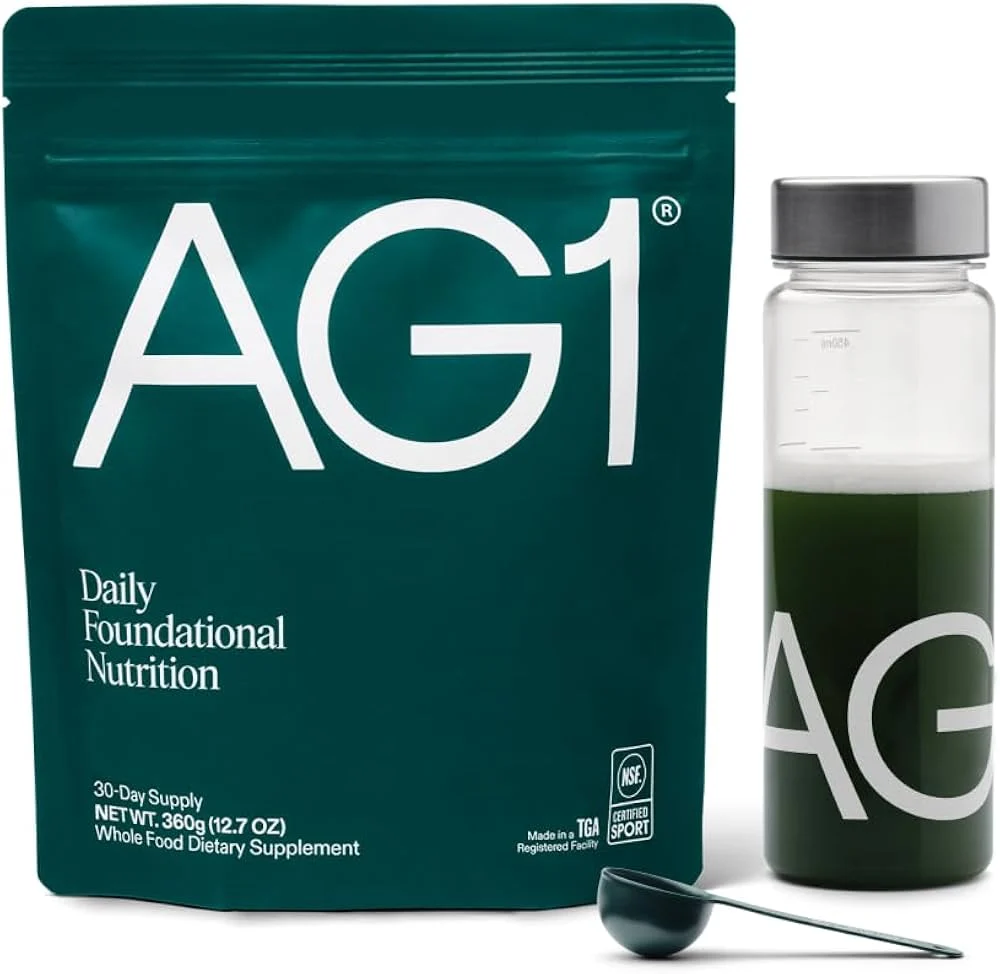
AG1 — the greens powder formerly called Athletic Greens — is the most-marketed supplement of the podcast era. One scoop, 75 ingredients, a promise of 'foundational nutrition' in a single daily drink. Strip away the sponsorship reads and you find a genuinely well-made product with two stubborn problems: you can't see most of the doses, and it costs about a thousand dollars a year. This is our evidence-led take on where it earns its price and where it doesn't.
Buy it if you want a single, sport-certified daily drink that covers micronutrient gaps and you value convenience over cost. Skip it if you're on a budget, already eat your vegetables, or want clinical doses of specific compounds — those are cheaper bought separately.
How we scored it
Five weighted pillars — quality and testing pull the score up; transparency and value drag it down.
75 quality ingredients across vitamins, minerals, greens, probiotics and adaptogens. Comprehensive — but kitchen-sink breadth invites underdosing.
Every dose outside the vitamin/mineral panel is buried in proprietary blends. You cannot verify what you're actually getting.
NSF Certified for Sport — banned-substance screened, purity and potency verified batch to batch. Genuinely rare in this category.
Real randomized gut-microbiome trials exist, but they're company-funded and modest. Many ingredients are unproven at undisclosed doses.
$3.30 a serving is roughly triple the greens-powder average. High quality, priced like a luxury.
What AG1 is — and what using it is like
AG1 launched as Athletic Greens in 2010 and rebranded to AG1 in 2022, riding a wave of podcast and creator sponsorships to become the default 'greens powder' in most people's minds. The pitch is 'Daily Foundational Nutrition': a single 13-gram scoop meant to cover your vitamin, mineral, probiotic and antioxidant bases so you can stop juggling a cabinet of pills.
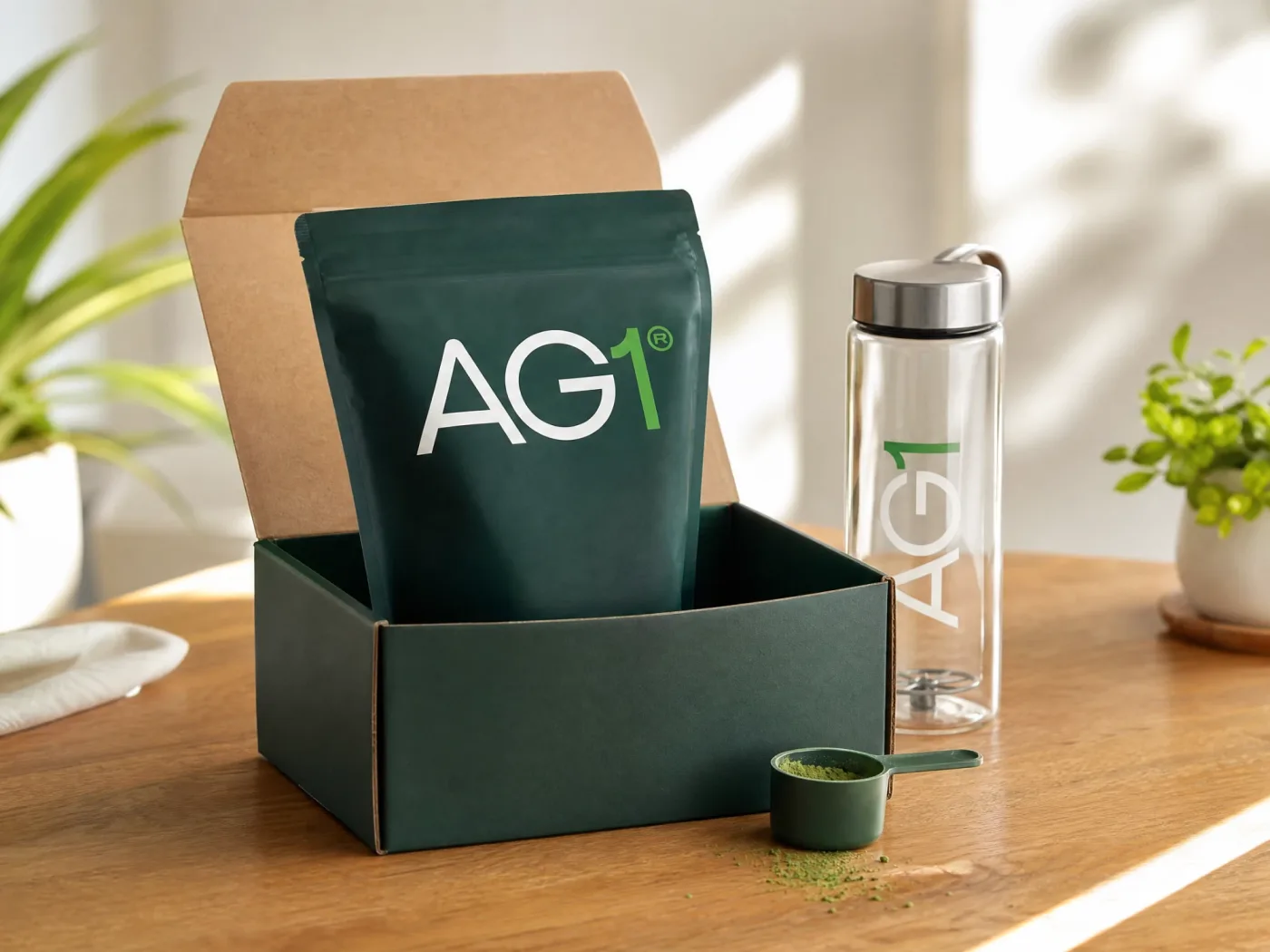
In practice it's a fine powder you shake into cold water. The taste is a mild, slightly sweet grassy-pineapple — genuinely one of the better-tasting greens formulas, and far easier to stomach than the swamp-water competitors. It clumps if you under-shake it, so a bottle with a whisk ball helps. As a daily habit it's frictionless, which is a real part of what you're paying for.
What's actually in it
AG1 packs 75+ ingredients into a 13-gram scoop: a full spread of vitamins and minerals, a greens and phytonutrient complex, digestive enzymes, mushrooms, adaptogens like ashwagandha, and a probiotic blend. The vitamin panel is transparent and, if anything, aggressive — the rest is where the picture blurs.
The problem isn't quality; it's disclosure. Everything outside the vitamin/mineral table sits inside proprietary blends, so you get a combined weight for a group of ingredients but no individual doses. In a 13-gram scoop shared across dozens of components, plenty of them almost certainly land below the amounts used in research. You're trusting the formula rather than verifying it.
The vitamin panel swings the other way — not too little, but far too much. Several water-soluble vitamins are dosed at multiples of the daily value that the body cannot use and simply excretes:
| Nutrient | % Daily Value | Reality check |
|---|---|---|
| Vitamin B12 | 16,667% | Water-soluble; the excess is simply excreted in urine. |
| Biotin (B7) | 1,100% | Deficiency is rare; megadoses can skew some lab blood tests. |
| Vitamin C | 556% | Absorption plateaus around 200 mg; the rest is largely excreted. |
None of this is dangerous for healthy adults, but it is a marketing decision as much as a nutritional one: a big '%DV' number reads well on a label even when the excess ends up in the toilet.
Does the evidence hold up?
AG1's best evidence is for the gut. In a company-funded randomized, double-blind, placebo-controlled trial, four weeks of daily AG1 enriched beneficial gut species — including L. acidophilus and B. bifidum — showing the probiotics survive digestion and reach the large intestine. A separate lab (Caco-2 cell) study suggested the synbiotic helps maintain gut-barrier function under an inflammatory challenge.
Take that for what it is: real, randomized, and narrow — and paid for by the manufacturer, which doesn't invalidate it but does warrant caution. The broader promises woven through AG1's marketing — sustained energy, immunity, focus — don't ride on trials of the finished product. They lean on the reputations of individual ingredients, many of which are present at undisclosed and probably sub-clinical doses. Believe the gut data; be skeptical of the halo around it.
Trust the gut-microbiome result — it's a real randomized trial. Treat the wider "energy, immunity, focus" halo as marketing until independent trials of the finished product exist.
Price & value
Here's the math, in USD as of July 2026. A 30-serving pouch is $99 one-off, or about $79 a month on the annual subscription — $2.63 to $3.30 per day, and roughly $950–1,190 a year. The greens-powder category averages closer to $1.50–2.00 a serving, so you're paying a premium of about 60–120% for the brand, the ingredient count, and the NSF certification.
The honest alternative for most goals is to buy the proven basics à la carte: creatine monohydrate (~$0.15/day), vitamin D3 (~$0.05/day), fish oil (~$0.30/day), and a cheap third-party-tested multivitamin (~$0.15/day) comes to about $0.65 a day — a fifth of AG1's cost — with every dose on the label. What you lose is convenience; what you gain is transparency and roughly $800 a year.
AG1 costs roughly 2.5–3× the closest quality rivals and about 5× a build-your-own basics stack.
AG1 vs. the competition
The uncomfortable truth for AG1 is that the nutritional gap between it and a $40 competitor is much smaller than the price gap suggests. Here's how it stacks up against the three alternatives people ask about most.
| AG1 | Live it Up | Huel Greens | Bloom | |
|---|---|---|---|---|
| Price / serving | $2.63–3.30 | $1.33 | $1.20 | $1.00 |
| Monthly (sub) | $79–99 | ~$40 | ~$36 | ~$30 |
| Ingredients | 75+ | 20+ | 91 | 30+ |
| Doses disclosed | Vitamins only | Fully | Fully | Partly |
| NSF Cert. for Sport | Yes | No | No | No |
| Probiotics | ~10 bn CFU | Yes | Yes | Yes |
| Taste | Good | Mixed | Earthy | Best |
Pros & cons
- +NSF Certified for Sport — one of the few greens powders with real banned-substance and potency testing.
- +Covers common micronutrient gaps in a single, genuinely convenient 30-second drink.
- +Five clinically studied probiotic strains at ~10 billion CFU, with company RCTs showing gut colonisation.
- +Palatable — a mild tropical-green taste most people tolerate cold, unlike many grassy competitors.
- +Consistent, well-audited manufacturing and a 90-day money-back guarantee on your first pouch.
- −Proprietary blends hide the dose of almost everything except the vitamin panel.
- −At $3.30 a serving it's ~3× the category average — roughly $1,000 a year.
- −Several water-soluble vitamins are dosed at absurd multiples of the RDA (B12 at 16,667%).
- −The 'foundational nutrition' pitch oversells: it is not a whole-food or protein replacement.
- −Much of the marketing rests on podcast sponsorship rather than head-to-head evidence.
The bottom line
AG1 is a quality product sold at a premium that only a specific buyer should pay. If the sport certification, the convenience, and the all-in-one format genuinely matter to you — and the cost doesn't sting — it delivers on what it is. For everyone else, the same nutritional ground is covered by a few transparent, third-party-tested basics, or a cheaper greens powder, at a fraction of the price. Great powder; hard price.
Check current price at AG1 →