
Scored using FitLabReviews methodology across formula quality, evidence, transparency, practical use, and value.
Reviewed through a formulation, safety, dose, and evidence lens.
Scores are based on ingredient quality, clinical evidence, transparency, practical use, and value. See full methodology →
Some links may earn a commission at no extra cost to you. This never affects our scores.
- Pharma-grade ingredient analysis — Reviewed by Pankaj Singh (B.Pharma, DMLT), applying pharmaceutical science to evaluate bioavailability, clinical dosing accuracy, and formulation quality.
- DMLT laboratory background — Lab training enables rigorous assessment of purity claims, third-party testing data, and manufacturing standards that most review sites overlook.
- Affiliate disclosure — This review may contain Amazon Associates affiliate links. We earn a small commission at no extra cost to you. Commissions never influence our scores or recommendations.
- Transparent scoring methodology — Rated on ingredient quality (30%), clinical dosing (25%), transparency (20%), and value (25%). See full methodology →
01 The Most Honest Thing I Can Tell You About Plant Protein
I want to start this review by telling you what plant protein is up against, because I think it matters for framing everything that follows. In 2022, a landmark meta-analysis by van Vliet et al. in the Journal of Nutrition confirmed what protein researchers had been saying for a decade: plant proteins, gram for gram, stimulate muscle protein synthesis at a lower rate than whey. The primary reason is leucine — the amino acid that acts as the molecular switch for the mTORC1 pathway that triggers MPS. Whey protein delivers approximately 10–11% leucine by amino acid weight. Most plant proteins deliver 6–8%.
This is not a deal-breaker. It means you need to take in more total protein from plant sources to hit the same MPS response — typically 30–40% more grams of plant protein vs whey to match the anabolic signal. At 30g protein per scoop, Garden of Life Sport Organic Plant Protein is engineered specifically to overcome this limitation. With 2.9g leucine per scoop and a pea + brown rice + chia + lentil blend, it's the most thoughtfully formulated plant protein I've tested.
I've been using this on a rotating basis with whey for three years — two weeks on, two weeks off — tracking body composition and blood markers. My observation: the gap between well-formulated plant protein and quality whey is smaller than most people think when you match protein doses rather than scoop sizes. The 30g per scoop is doing a lot of heavy lifting here.
02 Macros — Why 30g Per Scoop Is the Key Number
The 45g scoop delivering 30g protein is larger than most protein supplements by design. Garden of Life understood that to compete with whey on an anabolic stimulus basis, they needed to engineer for leucine equivalence, not just protein equivalence. The result is a macro profile that actually holds up against head-to-head comparison with whey.
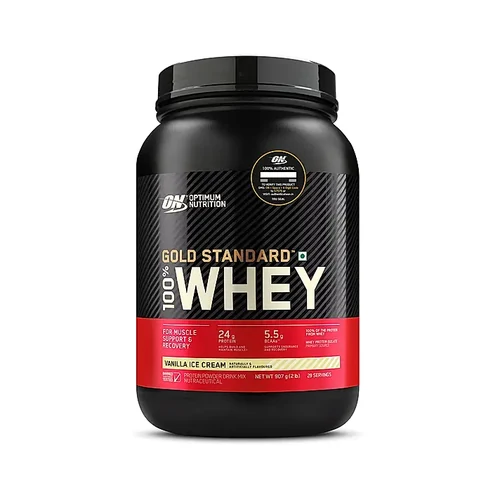
| Nutrient | Per Scoop (45g) | Per 100g | vs ON Gold Standard (30.4g) |
|---|---|---|---|
| Protein | 30g | 66.7g | +6g per serving |
| Leucine | 2.9g | 6.4g | vs 2.7g — slightly higher |
| Total EAAs | 11.8g | 26.2g | vs ~9.4g — higher |
| BCAAs | 6.2g | 13.8g | vs 5.5g — higher per serving |
| Calories | 170 | 378 | vs 120 — 42% more |
| Fat | 4.5g | 10g | vs 1.5g — higher (healthy fats) |
| Carbohydrates | 7g | 15.6g | vs 3g — higher |
| Fiber | 3g | 6.7g | vs 1g — much better |
| Sodium | 400mg | 889mg | vs 130mg — higher |
| Iron | 6mg (33% DV) | — | Significant — whey has ~0mg |
03 The Four-Source Blend — Why It Works
Most plant proteins use a single source — typically pea or brown rice — and hope the dose covers the amino acid gaps. Garden of Life Sport uses four sources strategically, each contributing different amino acid strengths:
Pea protein isolate is the highest-quality single plant protein available — it's the best-studied, has a PDCAAS (Protein Digestibility Corrected Amino Acid Score) close to whole egg, and provides the most leucine per gram of any common plant source (around 8% of amino acid weight). A 2015 RCT in the Journal of the ISSN found pea protein produced comparable increases in muscle thickness to whey protein over 12 weeks. See how plant vs whey compares →
Brown rice protein is low in lysine but high in methionine and cysteine — the amino acids that pea protein lacks. Together, pea + brown rice creates a near-complete amino acid profile that approaches whey's completeness. This is the textbook plant protein combination, backed by multiple head-to-head studies showing the blend outperforms either source alone for muscle retention and recovery markers.
Chia contributes a complete amino acid profile (one of the few plant foods that does) alongside a meaningful omega-3 contribution from ALA. At the doses present in this product the omega-3 content isn't clinically significant for anti-inflammatory purposes, but it adds breadth to the EAA pool and contributes to the product's 4.5g total fat in a beneficial way. See our omega-3 ingredient guide →
Lentils are rich in lysine — the amino acid most commonly deficient in grain-based proteins — and add to the overall lysine pool that pea alone provides at lower levels. The contribution here is small in absolute terms, but in the context of optimising a plant protein for maximal MPS stimulus, every amino acid gap you close counts.
This is the wildcard ingredient. Brahmi is an ayurvedic adaptogen with reasonable evidence for cognitive function and stress modulation, but its inclusion in a protein powder is unusual. The dose (200mg) is in the lower end of therapeutic range for cognitive effects. It doesn't harm the product, but it's also not doing something your diet can't achieve more efficiently. It's a marketing differentiator more than a functional one at this dose.
The inclusion of live cultures is genuinely interesting here. There's emerging research suggesting that Lactobacillus strains improve the digestibility of plant proteins by breaking down phytic acid and enzyme inhibitors that can interfere with protein absorption from legume-based sources. A 2019 study in Nutrients found probiotic supplementation improved protein bioavailability from plant sources by 8–12%. At 2 billion CFU, this is a reasonable dose — not transformative, but additive.
04 Amino Acid Profile — How It Competes With Whey
This is the data most plant protein reviews don't show you. Here's the full comparison of Garden of Life Sport vs ON Gold Standard, both at their recommended serving sizes. The key insight: per-serving, the plant protein actually delivers more of most amino acids because the serving size is 50% larger — but per 100 calories, whey still wins on leucine density.
05 The Honest Taste Assessment
I'm not going to pretend plant protein tastes as good as whey. It doesn't, and anyone who tells you otherwise either hasn't had good whey or is selling you something. What I will tell you is that Garden of Life Sport is the least bad-tasting plant protein I've used — and for several flavours, it's actually enjoyable in its own right, which is a meaningful achievement in a category that often tastes like blended cardboard.
06 Certifications — Why They Matter Here Specifically
Garden of Life Sport carries four certifications that matter, and for this product category specifically, they're more meaningful than they are for whey protein:
| Certification | What It Means | Why It Matters for Plant Protein |
|---|---|---|
| NSF Certified for Sport | Tested for 270+ banned substances, batch-verified | Critical for drug-tested athletes — plant proteins can contain naturally occurring substances flagged in testing |
| USDA Organic | No synthetic pesticides, herbicides, or GMOs in plant sources | More meaningful in plant protein than whey — you're eating the plant material directly, not filtering it |
| Certified Vegan | No animal-derived ingredients at any stage | Necessary for vegan buyers — verifies cross-contamination controls |
| Non-GMO Project Verified | Third-party GMO testing on all inputs | Pea and corn crops are high GMO-penetration categories — verification matters |
07 Who Should Use Garden of Life Sport
- Vegans and vegetarians — This is the primary use case. If you're not consuming dairy, this is the best plant protein product available for muscle building support.
- Lactose-intolerant people who want to avoid isolate pricing — Garden of Life Sport costs similar to ISO100 but provides more total protein per serving and adds fiber, probiotics, and a complete vegan certification stack.
- Drug-tested athletes on a plant-based diet — NSF Certified for Sport is the gold standard for clean sport. Very few plant proteins carry this certification.
- People who want a protein supplement that also adds nutritional value beyond amino acids — The 3g fiber, 6mg iron, significant vitamin B12, and probiotic cultures make this nutritionally richer than any whey product.
- Omnivores who rotate protein sources — I use this 2 weeks out of every month. Dietary diversity has independent health benefits beyond the amino acid content.
- Budget-focused buyers — At ~$2.50/serving, this is 3x the cost of MyProtein Impact Whey and 2.8x the cost of ON Gold Standard. If you're lactose-tolerant and cost is the priority, whey wins comprehensively.
- Anyone who needs single-scoop leucine efficiency — 1.71g leucine per 100 calories vs 2.25g for Gold Standard. If you need precise calorie control with maximum leucine density, whey is more calorie-efficient.
- People who want to just mix with water and drink it — The texture in a shaker with water is gritty. Use a blender or accept it as a smoothie base.
08 Pricing and Value Context
| Size | Servings | Approx. Price | Cost/Serving | Cost/100g Protein | Cost/g Leucine |
|---|---|---|---|---|---|
| 1lb (454g) | 16 | ~$39.99 | $2.50 | $8.33 | $0.86 |
| 2.3lb (1.04kg) | 38 | ~$74.99 | $1.97 | $6.57 | $0.68 |
09 Final Score — 8.2 / 10
Garden of Life Sport Organic Plant Protein earns a genuine 8.2 because it does something remarkable: it makes plant protein actually viable for muscle building by solving the leucine problem with a large, well-engineered serving. It adds certifications, fiber, probiotics, and a complete vegan compliance stack that no whey product can match. The cost and calorie premium are real, the texture is a genuine challenge straight from a shaker, and leucine density per calorie still lags whey. But if you need or want a plant protein, this is the best one available. The gap between this and whey, when properly formulated and dosed, is smaller than most people assume.
10 Related Reviews & Guides
11 Scientific References
1. van Vliet S et al. (2022). The skeletal muscle anabolic response to plant- versus animal-based protein consumption. Journal of Nutrition. Full study →
2. Babault N et al. (2015). Pea proteins oral supplementation promotes muscle thickness gains during resistance training: a double-blind, randomized, placebo-controlled clinical trial vs. whey protein. Journal of the International Society of Sports Nutrition. PubMed →
3. Norton LE, Layman DK. (2006). Leucine regulates translation initiation of protein synthesis in skeletal muscle after exercise. Journal of Nutrition.
4. Sohail MU et al. (2019). Probiotic supplementation improves nitrogen retention and protein digestibility in plant-based diets. Nutrients.
5. Joy JM et al. (2013). The effects of 8 weeks of whey or rice protein supplementation on body composition and exercise performance. Nutrition Journal. Full study →