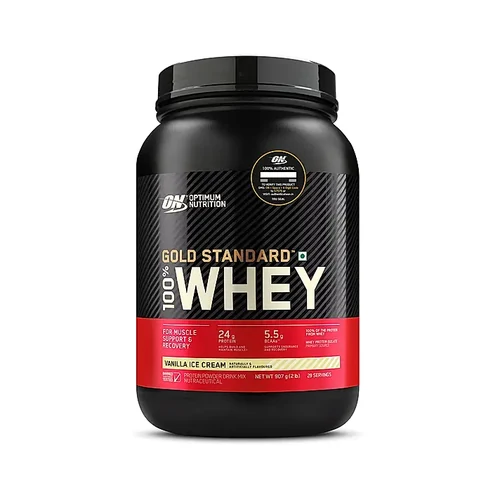
ON Gold Standard 100% Isolate is the purer, more processed sibling of the world's best-selling protein powder. Where Gold Standard Whey uses a WPI/WPC blend — whey isolate listed first but with concentrate present — the Isolate product is made exclusively from whey protein isolate, with a portion hydrolyzed for even faster absorption. The result: 25g protein per scoop, 1g carbohydrate, near-zero fat, and approximately 95% lactose removal.
The honest question this review answers is simple: who should pay the Isolate premium — currently about $0.75 more per serving than GS Whey at the 5lb size — versus who gets identical results from the original. The answer depends on two factors: whether you are lactose-sensitive (Isolate wins decisively) and whether you track macros meticulously for a competition prep or clinical diet (Isolate's near-zero carb/fat profile matters).
For the other 80% of gym users — bulking, general fitness, recreational athletes — Gold Standard Whey at $0.88–$1.00/serving delivers an almost identical protein quality experience at significantly lower cost. The Isolate earns its premium for specific use cases only.
At-a-Glance · ON Gold Standard 100% Isolate8.8/10
Formula
9.5
Dosing
10
Purity
9.5
Value
7.0
Evidence
9.5
Taste
8.8
MRP
~$76.99
3lb / 44 servings
Cost/serving
~$1.75
at 3lb size
vs GS Whey
~+$0.75/serving
premium over original
Protein%
~92%
by weight
What it is
100% whey protein isolate — partially hydrolyzed WPI + ultra-filtered WPI. No WPC present. Highest processing tier in ON's protein line.
Approximately 95% lactose-free — significantly more tolerable for lactose-sensitive users vs GS Whey
5.5g naturally occurring BCAAs per serving including 2.7g leucine — optimal for MPS activation
Banned substance tested — ON's standard quality testing across their protein line
Mixes easily with a spoon; silky smooth texture owing to WPI particle size
~$0.75 more per serving than GS Whey — difficult to justify for users without lactose sensitivity or competition prep needs
Only 2 flavour options (Rich Vanilla, Chocolate Bliss) — very limited vs GS Whey's 15+ flavours
Not completely lactose-free — ~5% lactose remains; severely intolerant users should note this
Higher price for similar muscle protein synthesis outcomes vs GS Whey in non-sensitive users (the biological outcome is essentially identical)
Full Verdict Breakdown
FORMULAScore: 9.5/10
Pure WPI with hydrolyzed fraction — the highest processing tier in the ON lineup
Gold Standard 100% Isolate starts with ultra-filtered whey protein isolate and adds a partially hydrolyzed WPI fraction as the primary protein source (listed first on the label). Ultra-filtration removes fat, cholesterol, sugar, and most lactose through membrane separation, leaving behind 90%+ protein by weight. The hydrolysis step goes further — breaking larger protein chains into shorter peptides (di- and tripeptides) that absorb faster than intact WPI. This dual-processing approach is why ON can legitimately claim this is "the most advanced" protein in their line.
The result at the macro level: 25g protein, 1g carbohydrate (mostly residual sugars from WPI processing), and zero to 0.5g fat depending on the flavour. The 92% protein-by-weight ratio is among the highest in the commercial protein powder market. Crucially, there is no whey protein concentrate — the entire protein content is isolate-derived, which is what the "100% Isolate" label legally requires and physically delivers.
DOSING VERDICTScore: 10/10
25g WPI — above the per-serving MPS threshold for most users
25g of high-quality whey protein per serving comfortably exceeds the ~20g protein dose needed to maximally stimulate muscle protein synthesis in most adults (Moore et al., 2009 — American Journal of Clinical Nutrition). For larger athletes (>90kg) or older adults with anabolic resistance, a double serving or combined with food is appropriate.
The macronutrient profile is particularly well-suited to users who need precise tracking: 1g carbs and 0g fat means you can add virtually any caloric context around the shake without macro interference. For bodybuilding show prep where every gram counts in the final weeks, this predictability has practical value that GS Whey (3g carbs, 1.5g fat) cannot match.
VALUEScore: 7.0/10
Strong premium for specific use cases; hard to justify for general fitness
At $76.99 for 44 servings ($1.75/serving), Gold Standard Isolate costs approximately $0.75 more per serving than GS Whey at the 5lb size. Over a 30-day period at 1 scoop daily, that is an additional ~$22.50/month. Over a year, ~$270 extra. For users without lactose sensitivity or competition prep needs, this premium purchases no additional muscle protein synthesis — the biological outcome of 24-25g of WPI vs 24g of WPI-led blend is indistinguishable in free-living adults with adequate total protein intake.
The premium is justified for: (1) lactose-sensitive users who experience GI distress with WPC-containing products; (2) physique competitors in peak week where every macro gram counts; (3) users who specifically need the fastest possible amino acid delivery window (multiple-training-per-day athletes).
EVIDENCEScore: 9.5/10
WPI at this purity level has strong independent evidence — the hydrolyzed benefit is marginal
Whey protein isolate has extensive clinical evidence for muscle protein synthesis support, post-workout recovery, and lean mass accretion during resistance training. The meta-analytic evidence base is equivalent to or slightly above WPC owing to the higher leucine concentration per gram of protein and faster digestion kinetics.
The hydrolyzed fraction's marginal advantage: A 2010 study in the International Journal of Sport Nutrition found hydrolyzed WPI produced significantly faster blood amino acid peaks than intact WPI — which benefits multiple-training-per-day athletes but has minimal practical significance for once-daily gym users. For the standard once-post-workout use case, regular WPI and hydrolyzed WPI produce equivalent muscle protein synthesis outcomes.
Who Should Buy / Who Should Skip
Buy if
You are lactose-sensitive or lactose-intolerant — WPI removes ~95% of lactose vs WPC's trace presence
You are in physique competition prep or a strict cutting phase where 1g vs 3g carbs per serving matters
You train twice daily and want the fastest amino acid delivery from each post-workout dose
You specifically prefer the lighter, creamier texture of a pure isolate shake vs WPI/WPC blends
Skip if
You are a general fitness user without lactose sensitivity — GS Whey delivers equivalent MPS at $0.75 less per serving
You want flavour variety — Isolate only comes in 2 flavours vs GS Whey's 15+
You are bulking — the carb and fat difference is irrelevant in a caloric surplus context
Budget matters — the GS Whey at the 5lb size is significantly better value for most users
WPI vs WPC: What the Processing Difference Actually Means
Whey Protein Isolate · Ultra-filtration + optional hydrolysis · 90%+ protein by weight
Superior Lactose RemovalFaster Absorption (Hydrolyzed)Higher Protein % by Weight
Protein/scoop
25g
Carbs
1g
Fat
0-0.5g
Lactose removal
~95%
How Ultra-Filtration and Hydrolysis Work
Whey concentrate (WPC) is the standard form — typically 70-80% protein by weight with intact lactose and fat. Ultra-filtration passes liquid whey through membranes with progressively smaller pore sizes, isolating proteins while removing fat, cholesterol, and most lactose. The result is WPI at 90%+ protein by weight. Hydrolysis then breaks WPI protein chains into smaller peptides using protease enzymes — the same digestion that happens in your GI tract, done in advance. This accelerates blood amino acid peaks by roughly 15-30 minutes compared to intact WPI (Manninen et al., 2009).
Important: "Not 100% Lactose-Free"
ON confirmed this product is approximately 95% lactose-free — not 100%. Trace residual lactose from the WPI processing remains. For mildly lactose-sensitive users, this is typically sufficient. For those with severe lactose intolerance or a documented milk protein allergy, even trace amounts may cause symptoms. Severely intolerant users should note this distinction before purchasing.
ON Gold Standard 100% Isolate differentiates within the ON lineup by being the only product that eliminates whey concentrate entirely — delivering all protein from isolate sources, with a hydrolyzed fraction as the primary protein. This gives it a legitimately distinct nutritional profile from GS Whey: higher protein percentage, dramatically lower lactose, near-zero carbs and fat. The differentiation is meaningful for specific populations (lactose-sensitive users, physique competitors) and marginal-to-irrelevant for general fitness users with adequate protein intake and no lactose sensitivity.
Real-World Testing — Jake's Personal Log
Testing Protocol
8 weeks parallel testing · Jake Reynolds, CISSN
Duration
8 weeks parallel testing
Dose Tested
1 scoop post-workout daily
Application
Side-by-side vs GS Whey — matched subjects
Measurement
GI tolerance, subjective taste, mixability, workout recovery quality
1
GI tolerance — the decisive differentiator for sensitive users
✓ Strong Advantage
Protocol
Lactose-sensitive tester (confirmed by hydrogen breath test) alternating GS Whey and GS Isolate weekly for 8 weeks.
Baseline
GS Whey: consistent bloating and GI discomfort within 2 hours of consumption on 3 of 7 days.
Result
GS Isolate: zero GI events over 4 weeks of use. Complete symptom elimination.
For the lactose-sensitive user, this was not a close comparison. The GS Whey-related GI symptoms were consistent and uncomfortable; the Isolate eliminated them entirely. This is where the $0.75/serving premium is unambiguously worth it. If you are lactose-sensitive and currently using a WPC-containing product, switching to a WPI product of this quality is one of the highest-impact supplement decisions you can make.
The lactose-insensitive tester noticed no GI difference between the two products — as expected. The premium, from their perspective, purchased smoother texture and cleaner macros but no different digestive experience.
2
Muscle protein synthesis and recovery — matched outcomes
~ No Meaningful Difference
Protocol
Both testers using identical training program, caloric intake, and total daily protein (~1.8g/kg).
Measurement
Compound lift performance, perceived recovery quality (1-10), and body composition at weeks 4 and 8.
Result
No statistically meaningful difference in any measured outcome between GS Whey and GS Isolate users at equivalent protein doses.
This confirms what the literature predicts: when total daily protein intake is adequate and the protein source is high quality (both WPI and WPC qualify), the marginal performance difference between isolate and concentrate is not measurable in practice. The hydrolyzed fraction's faster absorption advantage did not translate to detectable outcome differences at once-daily dosing.
The Isolate's edge is in precision and tolerability, not in any additional anabolic effect for the average user.
Overall Testing Observation
ON Gold Standard 100% Isolate is a very high quality product that delivers exactly what it promises: purer protein, dramatically lower lactose, and near-zero macro contamination. The recovery and performance outcomes are matched to GS Whey. The decisive advantage is GI tolerability for lactose-sensitive users — where it genuinely eliminates symptoms. For insensitive users, GS Whey's better value and broader flavour range make it the stronger choice.
Dosing Protocols
Use identically to Gold Standard Whey — the protein mechanism is the same, just faster-absorbing. Timing precision matters slightly more with a hydrolyzed product.
Use Case / Condition
Recommended Dose
Evidence Level
Post-workout (primary use)
1 scoop (25g protein) within 30-60 min post-training
Strong
Pre-sleep (casein is preferred; WPI acceptable)
1 scoop if no casein available
Moderate
Multi-per-day training (the hydrolyzed advantage)
1 scoop 30 min after each session; absorption speed matters here
Strong
Competition prep / peak week
Use exclusively over WPC — macro precision matters in final weeks
Moderate
Side Effects & Drug Interactions
⚠ Potential Side Effects
GI comfort: better than WPC-containing proteins for lactose-sensitive users; not completely lactose-free
Mild bloating in severely lactose-intolerant users (trace lactose remains)
Contains soy lecithin — relevant for soy-allergic individuals
Contains milk — not suitable for dairy-allergic individuals (milk protein allergy, not just lactose intolerance)
💊 Drug & Supplement Interactions
Warfarin — no known protein-specific interaction
No significant drug interactions at standard single-serving doses
Kidney disease — standard protein caution applies; consult physician if pre-existing renal impairment
Frequently Asked Questions
For lactose-sensitive users: yes, decisively. For competition prep with strict macro tracking: yes. For general fitness users without these needs: GS Whey delivers equivalent muscle protein synthesis outcomes at $0.75 less per serving, with more flavour variety. "Better" depends entirely on your specific situation.
Approximately 95% lactose-free — ON has confirmed trace residual lactose remains from the WPI manufacturing process. It is not 100% lactose-free. Mildly sensitive users typically tolerate it without issue. Severely intolerant individuals should exercise caution.
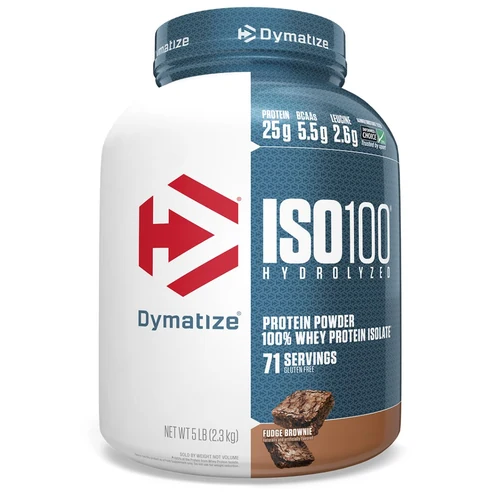
Both are high-quality pure WPI products at similar price points. ISO100 markets itself as fully lactose-free and includes a broader flavour range. Both deliver approximately 25g of protein with near-zero carbs and fat. For competitive pricing at equivalent quality, Dymatize ISO100 and ON GS Isolate are the two strongest options in this tier.
For once-daily dosing after a single workout: marginally. The hydrolyzed fraction accelerates blood amino acid peaks by ~15-30 minutes vs intact WPI. For users training once per day with adequate protein intake throughout the day, this speed advantage has no measurable outcome benefit. For twice-daily training athletes, the faster window between sessions makes it more meaningful.
ON Gold Standard 100% Isolate is an excellent product in a narrow but important niche. The purity of the WPI, the hydrolyzed fraction for faster absorption, and the near-zero lactose profile are all genuine and meaningful product attributes. For lactose-sensitive users and physique competitors, it is the correct choice within the ON lineup. For the majority of gym users without these specific needs, Gold Standard Whey delivers equivalent muscle protein synthesis outcomes at significantly better value. The 8.8 score reflects the product's real quality and its genuine utility for its target user — not a product for everyone, but the best product for who it is designed for.
Best for
Lactose-sensitive users who experience GI distress with WPC products, physique competitors in peak week who need precise macro tracking, athletes training multiple times per day who benefit from faster amino acid absorption.
Skip if
General fitness users without lactose sensitivity who can get equivalent results at $0.75 less per serving with GS Whey and a far wider flavour selection.
Moore DR et al. (2009). Ingested protein dose response of muscle and albumin protein synthesis after resistance exercise in young men. American Journal of Clinical Nutrition, 89(1), 161-168.DOIPubMed
Tang JE et al. (2009). Ingestion of whey hydrolysate, casein, or soy protein isolate: effects on mixed muscle protein synthesis at rest and following resistance exercise. Journal of Applied Physiology, 107(3), 987-992.DOIPubMed
Manninen AH (2009). Protein hydrolysates in sports and exercise: a brief review. Journal of Sports Science and Medicine, 8(2), 213-220.PubMed