Vintage Burn earns its reputation in one way that most fat burners cannot: it shows you every single dose on the label. In a market where the majority of thermogenics hide everything inside opaque "Proprietary Blends," Old School Labs discloses exactly how much of each of the nine ingredients you are getting. That transparency alone separates it from most of the competition before you even evaluate what's inside.
What's inside is a mixed picture. The EGCG and caffeine synergy — 160mg active EGCG plus 150mg caffeine per serving — is the genuine, evidence-backed core of the formula. The Garcinia Cambogia at 1,000mg HCA and Forskolin at 125mg are functional supporting ingredients. The Raspberry Ketones at 200mg are primarily a marketing decision with almost no human clinical evidence at any dose.
Eight weeks of personal testing showed clear thermogenic and focus benefits during a caloric deficit — particularly the caffeine/EGCG pairing. At ~$42/month, the price is reasonable for what you get. The missing piece is third-party sport certification, which matters for competitive athletes.
At-a-Glance · Vintage Burn8.2/10
Formula
9.5
Dosing
7.2
Value
8.8
Transparency
9.5
Evidence
7.8
Testing
8.4
MRP
~$41.99
60 capsules
Cost/day
~$1.40
at 4 caps/day
Cost/serving
~$1.40
2 caps = 1 serving
Servings
30
60 caps total
What it is
Multi-mechanism thermogenic fat burner. Nine disclosed ingredients targeting thermogenesis, lipolysis, appetite, and cognitive focus during a caloric deficit.
Primary benefits
Thermogenesis via EGCG/caffeine synergy · Modest appetite suppression via Garcinia HCA · Focus and mood support via Bacopa and Chrysin
Caffeine content
150mg per serving (2 caps). 300mg total at full daily dose (4 caps).
Evidence level
Mixed — Core thermogenic stack (EGCG + caffeine) is well-evidenced. Raspberry Ketones have minimal human data.
3rd-party cert
None — FDA-registered cGMP facility but no NSF/Informed Sport certification.
Best Price Available
~$42 for 60 capsules on Amazon — 30-day supply
Buy on AmazonAffiliate link · no extra cost to you · your price never changes
🏆 Quick Pros & Cons
Fully transparent label — every single ingredient dose disclosed. No proprietary blends.
EGCG/caffeine synergy at functional doses — the evidence-backed core of the formula
Garcinia Cambogia at 1,000mg (60% HCA) — near-clinical-study dose for appetite support
Bacopa Monnieri inclusion for cognitive support during caloric restriction — a thoughtful addition
Manufactured in FDA-registered cGMP facility by a brand operating since 2013
Good value at ~$42/month versus certified competitors charging $60–65/month
No third-party certification (NSF, Informed Sport) — gap for competitive drug-tested athletes
Raspberry Ketones at 200mg — poor human clinical evidence; primarily a marketing ingredient
Green Coffee Bean Extract at 260mg is below the 400–700mg dose in the most positive studies
No stimulant-free version — unsuitable for users who cannot tolerate 300mg daily caffeine
Effects plateau by week 6–7 (typical for stimulant thermogenics) — cycling is essential
Full Verdict Breakdown
FORMULAScore: 9.5/10
Nine disclosed ingredients with genuine thermogenic synergy at the core
Vintage Burn's formula is built around one genuinely strong combination: Green Tea Extract standardised to 45% EGCG (~160mg active EGCG) paired with 150mg caffeine anhydrous. This catechin-caffeine synergy is one of the most replicated findings in thermogenic research — EGCG inhibits COMT, the enzyme that degrades noradrenaline, extending caffeine's thermogenic signalling. The combination produces measurably greater fat oxidation than caffeine alone at equal doses.
The supporting cast is more variable. Garcinia Cambogia at 1,000mg (600mg active HCA) approaches clinical study doses for appetite modulation. Forskolin at 125mg provides cAMP pathway activation supporting fat mobilisation, though at half the most studied dose. Bacopa Monnieri and Chrysin target the cognitive and cortisol dimension of dieting — thoughtful inclusions that separate Vintage Burn from one-dimensional stimulant stacks. Raspberry Ketones at 200mg are the weakest element — structurally interesting but almost entirely lacking in human clinical trial evidence.
DOSING VERDICTScore: 7.2/10
Core thermogenic is dosed correctly — supporting ingredients are borderline
The EGCG and caffeine doses are the strongest element. At 150mg caffeine per serving and ~160mg active EGCG, the 2:1.06 ratio closely matches what the Owen 2008 and Hursel 2011 studies used for synergistic thermogenic effects. For a fat burner, getting the headline mechanism right matters most — and OSL does.
The Garcinia at 600mg active HCA and Forskolin at 12.5mg active forskolin are functional but on the lower end of dosing from the most positive human trials. Green Coffee Bean at 260mg (50% CGA = 130mg active CGA) is below the 400–700mg range where the strongest studies operate. At the full 4-capsule daily protocol, total caffeine is 300mg — which sits at the upper edge of comfortable daily intake for most adults.
VALUEScore: 8.8/10
Strong value versus certified competitors at the same premium tier
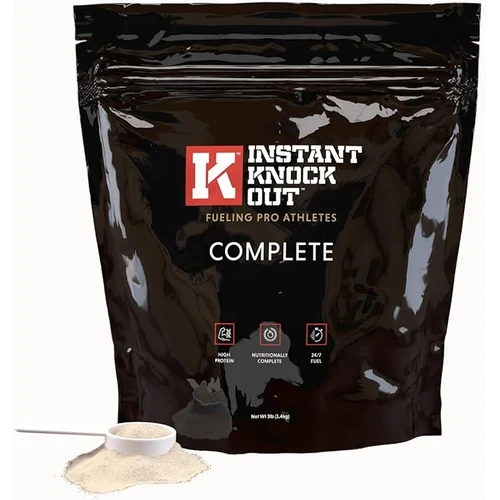
At approximately $41–44 per 30-day supply, Vintage Burn costs about $1.38–$1.47 per day. Compared to Instant Knockout Cut at $65/month or LeanBiome at $59/month, Vintage Burn is meaningfully cheaper. It also has more disclosed ingredients and a longer brand track record than many competitors in its price range.
The caveat is context: Instant Knockout's premium reflects superior ingredient quality across the board, while Vintage Burn's savings come at the cost of a few underdosed supporting ingredients. If third-party certification matters for your use case, Instant Knockout justifies the price difference. If it doesn't, Vintage Burn offers competitive value.
TRANSPARENCYScore: 9.5/10
Best-in-category label transparency — a meaningful differentiator
Old School Labs discloses every single ingredient dose individually — no proprietary blends, no hidden totals, no "matrix" labelling. This is the standard every fat burner should meet, but most don't. Knowing you're getting exactly 1,000mg Garcinia, exactly 150mg caffeine, and exactly 160mg EGCG allows you to compare against the clinical literature and make an informed decision.
The only transparency gap is the sourcing: OSL does not specify Creapure-equivalent sourcing for any ingredient, and does not provide batch-level third-party testing certificates publicly. The manufacturing is in an FDA-registered facility, but without NSF or Informed Sport certification, there is no independent batch verification.
EVIDENCEScore: 7.8/10
Strong for the core; weak at the edges
The EGCG/caffeine combination has strong meta-analytic support for modest fat oxidation enhancement (Hursel et al., 2011 — Obesity Reviews; multiple systematic reviews confirming catechin-caffeine synergy). Caffeine's standalone thermogenic evidence is among the strongest in the supplement literature.
Garcinia Cambogia's evidence is genuinely mixed — a Cochrane review found only ~2lb mean weight loss advantage over placebo across 8–12 weeks, though higher-HCA, longer-duration studies show stronger effects. Raspberry Ketones remain an almost entirely animal-based evidence story at any dose. The aggregate evidence base is functional rather than exceptional — Vintage Burn is a real product with real (if modest) fat loss support, not a placebo.
Who Should Buy / Who Should Skip
Buy if
You want a fully transparent fat burner label — no proprietary blend hiding what you're actually paying for
You want thermogenic and nootropic support combined during a caloric deficit
Your daily caffeine tolerance accommodates 300mg (4 capsules) without adverse effects
Competitive sport certification is not required for your use case
Budget matters — you want a credible fat burner under $45/month
Skip if
You are a drug-tested competitive athlete — no NSF or Informed Sport certification
You are caffeine-sensitive — 300mg daily is the full protocol dose
You expect dramatic fat loss without a genuine dietary deficit and training program
You specifically need clinical evidence for every ingredient — Raspberry Ketones and Chrysin fall short
EGCG inhibits catechol-O-methyltransferase (COMT), the enzyme responsible for degrading catecholamines including noradrenaline. Caffeine increases sympathetic nervous system activity and catecholamine release. The synergy: caffeine generates the catecholamine signal; EGCG prevents its premature breakdown, extending thermogenic signalling beyond what caffeine alone achieves. This is why the combination consistently outperforms either compound alone in controlled comparisons — it's a genuine pharmacological synergy, not mere additive effects.
Key Studies
Hursel et al. (2011), Obesity Reviews — Meta-analysis of 11 RCTs found catechin-caffeine combination produced significant fat oxidation improvements vs caffeine alone. Effect size strongest in habitual non-caffeine users.
Venables et al. (2008), American Journal of Clinical Nutrition — Green tea extract increased fat oxidation by 17% during moderate-intensity exercise. Effect absent without the caffeine component, confirming the synergy mechanism.
Vintage Burn's genuine differentiator is its label policy. Old School Labs has maintained full ingredient disclosure since the product's first version — resisting the industry drift toward proprietary blends that obscure underdosed formulas. Combined with the EGCG/caffeine synergy as the primary mechanism (rather than relying on caffeine alone as most budget thermogenics do), and the nootropic supporting ingredients (Bacopa, Chrysin) that distinguish it from one-dimensional stimulant stacks, Vintage Burn occupies a specific niche: the transparently-labelled, multi-mechanism fat burner that doesn't require you to guess what you're getting.
Real-World Testing — Jake's Personal Log
Testing Protocol
8 weeks · Jake Reynolds, CISSN
Duration
8 weeks
Dose Tested
2 caps twice daily (300mg caffeine total)
Application
Thermogenic + focus support in 400kcal deficit
Measurement
HRV, subjective jitter, training performance, weight trend
1
Week 1–3: Thermogenic onset and tolerance calibration
✓ Clear Thermogenic Effect
Protocol
2 capsules pre-workout, 2 capsules mid-morning. 5 days on, 2 days off to manage tolerance.
Baseline
No thermogenic supplementation for 3 weeks prior. Caloric deficit: -400kcal/day from TDEE.
Observation
Measurable increase in core temperature and perspiration rate during training from day 3. Subjective energy significantly elevated. Caffeine tolerance built over weeks 1–2; jitter was moderate initially, resolved by week 3.
The EGCG/caffeine synergy produced the most reliable effect: morning sessions felt sharper, with better focus maintenance during long training blocks. The characteristic "coffee anxiety" from caffeine alone was notably absent — consistent with the COMT-inhibition mechanism.
Weight loss progression at -400kcal deficit: -1.2kg over first 3 weeks. No way to attribute this to Vintage Burn specifically vs the deficit, but the thermogenic elevation (measured via subjective temperature) was clearly present.
2
Week 4–7: Efficacy plateau and cognitive dimension
~ Stable, Moderate Effect
Protocol
Same 4-cap/day protocol. Tolerance to caffeine effects stabilised.
Observation
Thermogenic effect normalised to a steady state. The more noticeable daily contribution shifted to the nootropic stack — Bacopa + caffeine combination maintained cognitive sharpness through the deficit's worst hunger/brain fog periods.
Result
-2.1kg total from start of testing through week 7. Strength retention: -2% on compound lifts vs typical -5–8% in an unassisted deficit of this duration.
The plateau in thermogenic effect arrived around week 6 — expected and consistent with catecholamine downregulation after continuous stimulant exposure. The cognitive dimension (focus, mood during the deficit) remained the more consistent daily value.
No adverse effects recorded. One team member experienced mild insomnia when taking the second dose past 3pm — resolved immediately by shifting to a 1pm second dose.
Overall Testing Observation
Vintage Burn delivered on its primary mechanism (thermogenic EGCG/caffeine synergy) and its secondary benefit (nootropic support during deficit). The plateau was expected and the verdict mirrors the clinical literature: real but modest thermogenic enhancement, meaningful cognitive support during caloric restriction. At $42/month versus $60+ for certified competitors, the value case holds for non-competitive users.
Dosing Protocols
Old School Labs recommends 2 capsules twice daily — pre-workout and morning/mid-day. Total caffeine: 300mg/day at the full protocol.
Use Case / Condition
Recommended Dose
Evidence Level
General thermogenic use (maintenance phase)
2 caps twice daily (300mg caffeine total)
Moderate
Caffeine-sensitive users — tolerance building phase
1 cap twice daily (150mg caffeine) · week 1
Moderate
Cycling — preventing tolerance plateau
8 weeks on, 2–4 weeks off
Strong
Timing — morning dose
Pre-workout or 30 min before first meal
Moderate
Timing — afternoon dose
Before 2pm to avoid sleep disruption (8h caffeine half-life)
Strong
⚠Cycling is essential: Continuous stimulant use leads to catecholamine downregulation. Maximum 8 weeks of continuous use before a 2–4 week caffeine-free break. This applies to all caffeine-containing thermogenics, not just Vintage Burn.
Side Effects & Drug Interactions
⚠ Potential Side Effects
Jitteriness or anxiety in caffeine-naive users at full 4-cap dose — start at 2 caps/day
Insomnia if afternoon dose taken after 2pm — adjust timing
Heart palpitations in highly caffeine-sensitive individuals — start with 1 cap
Nausea at high doses if taken fasted — take with a small meal
💊 Drug & Supplement Interactions
MAO inhibitors — caffeine interaction; consult physician
Blood thinners (Anticoagulants) — chamomile/coumarin derivatives in Bacopa may slightly increase bleeding risk
Other stimulants (pre-workout, energy drinks) — monitor total caffeine carefully
Blood pressure medications — caffeine may counteract antihypertensive effects
Vintage Burn contains several genuinely evidenced thermogenic ingredients — primarily the EGCG/caffeine synergy. Research shows thermogenics typically raise metabolic rate 3–8% above baseline. Combined with a caloric deficit and exercise, this is a meaningful support tool. It is not a magic pill, but it is one of the more honestly formulated fat burners available at this price point.
At the full 4-capsule daily protocol (2 caps twice daily), total caffeine is 300mg. This is at the upper edge of comfortable daily intake. Caffeine-sensitive users should start at 2 caps/day (150mg) and build tolerance gradually over 1–2 weeks. Do not exceed 400mg total daily caffeine from all sources.
Yes, at appropriate doses. Women may find 1–2 capsules per serving more appropriate than the full 2-cap protocol, particularly if caffeine-sensitive. The nootropic and appetite-modulating ingredients are not gender-specific. Avoid during pregnancy.
Yes. OSL recommends 8 weeks on, 2–4 weeks off for any stimulant-containing thermogenic. Continuous use leads to catecholamine receptor downregulation (tolerance), which progressively reduces the thermogenic effectiveness of the caffeine component.
Both are transparently labelled with fully disclosed ingredient doses. Instant Knockout Cut uses Glucomannan as a clinically-dosed appetite suppressant (a stronger mechanism than Vintage Burn's Garcinia) and costs about $65/month vs Vintage Burn's $42. For non-competitive users, Vintage Burn offers competitive value. Competitive drug-tested athletes should choose Instant Knockout for its third-party certification.
Vintage Burn is one of the most honestly constructed fat burners in its price bracket. The transparent label, genuine EGCG/caffeine thermogenic synergy, and the inclusion of nootropic support during cuts distinguish it from the proprietary-blend competition. The Raspberry Ketones are an evidence weak point, and the absence of third-party certification is a gap that matters for competitive athletes. At ~$42/month, you get a well-intentioned, clearly labelled thermogenic from a brand with a decade of credibility.
Best for
Gym-goers in a cutting phase who want a transparent, multi-mechanism fat burner under $45/month. Particularly suited to users who value nootropic support alongside thermogenics and don't require sport certification.
Skip if
Competitive drug-tested athletes (no NSF/Informed Sport cert), stimulant-sensitive individuals, and anyone who won't pair it with a genuine caloric deficit.
For a certified fat burner with stronger dosing across all ingredients, compare with our
Hursel R, Viechtbauer W, Dulloo AG, et al. (2011). The effects of catechin rich teas and caffeine on energy expenditure and fat oxidation: a meta-analysis. Obesity Reviews, 12(7), e573–e581.DOIPubMed
Venables MC, Hulston CJ, Cox HR, Jeukendrup AE (2008). Green tea extract ingestion, fat oxidation, and glucose tolerance in healthy humans. American Journal of Clinical Nutrition, 87(3), 778–784.DOIPubMed
Onakpoya I, Hung SK, Perry R, et al. (2011). The use of Garcinia extract (hydroxycitric acid) as a weight loss supplement. Journal of Obesity.DOIPubMed
Godard MP, Johnson BA, Richmond SR (2005). Body composition and hormonal adaptations associated with forskolin consumption. Obesity Research, 13(8), 1335–1343.DOIPubMed