Kaged Creatine HCl uses the patented CON-CRET® form of creatine hydrochloride — a salt form that is approximately 60 times more soluble in water than standard creatine monohydrate. The solubility advantage is real, measurable, and produces a notably superior mixing experience: a 750mg serving dissolves completely in a small amount of liquid with zero texture and zero grittiness.
The contested question — which this review addresses with full evidence — is whether 750mg of creatine HCl equals 5g of creatine monohydrate for muscle phosphocreatine saturation. The manufacturer's claim relies primarily on solubility and in vitro absorption data. No independent, peer-reviewed RCT has demonstrated equivalent phosphocreatine loading at 750mg HCl versus 5g monohydrate in trained human subjects measured by muscle biopsy.
Kaged Creatine HCl makes specific sense for one defined user profile: anyone who has experienced genuine GI distress with creatine monohydrate loading doses. The solubility advantage translates directly to significantly reduced bloating and osmotic discomfort. For everyone else, plain creatine monohydrate delivers equivalent or stronger evidence-backed performance at a lower cost per gram of active creatine.
At-a-Glance · Kaged Creatine HCl7.8/10
Formula
9.0
Dosing
6.0
Value
8.0
Transparency
9.0
Evidence
6.5
Testing
9.2
MRP
~$27.99
75 servings
Cost/serving
~$0.37
at 750mg label dose
Cost/5g equiv
~$2.47
vs $0.10–0.48 monohydrate
Servings
75
per tub
What it is
Creatine hydrochloride (CON-CRET® patented form). A creatine salt with dramatically superior water solubility vs monohydrate. 750mg per serving.
Primary benefit
GI tolerability — significantly less bloating and osmotic distress than monohydrate loading doses
Solubility
~60× more soluble than creatine monohydrate in water — mixes completely in minimal liquid
Evidence vs monohydrate
Not established by independent RCT — superiority claim is primarily from solubility/in vitro data, not muscle biopsy phosphocreatine trials
3rd-party cert
Informed Sport ✅ — Regular banned substance testing; safe for competitive athletes
Best Price Available
~$28 for 75 servings on Amazon — best HCl price
Buy on AmazonAffiliate link · no extra cost to you · your price never changes
🏆 Quick Pros & Cons
CON-CRET® patented manufacturing process with pharmaceutical-grade purity controls
~60× higher water solubility than monohydrate — mixes completely in minimal liquid with zero texture
Significantly reduced GI bloating and osmotic discomfort versus monohydrate loading doses
Informed Sport certified — batch-tested for banned substances; safe for competitive sport
Kaged brand has strong QA reputation and transparent manufacturing standards
75 servings per tub at $28 — good per-tub price for the HCl form
No independent peer-reviewed RCT demonstrating equivalent muscle phosphocreatine saturation to 5g monohydrate
"Smaller dose, same effect" claim is based primarily on solubility data, not comparative performance trials
Cost per equivalent gram of creatine is 5–25× higher than monohydrate options
No performance advantage over monohydrate has been demonstrated in controlled human studies
If GI tolerability is not an issue for you, there is no evidence-based reason to pay more for HCl
Full Verdict Breakdown
FORMULAScore: 9.0/10
Clean, single-ingredient formula with real solubility advantage
The formula is a single ingredient: 750mg of CON-CRET® creatine hydrochloride per serving. The HCl modification involves attaching a hydrochloride group to creatine, producing a salt that is dramatically more water-soluble than standard creatine monohydrate. The Vireo Systems patent covers the specific synthesis process for pharmaceutical-grade CON-CRET®. The formula itself is clean — no unnecessary additives, no fillers, no artificial colours. Available in unflavoured and naturally-flavoured options.
Kaged's broader quality standards are solid. Their manufacturing facility holds GMP certification, they conduct third-party testing via Informed Sport, and their brand reputation for quality control is well-established across their product line. The product does what it claims to do in terms of solubility and mixability.
DOSING VERDICTScore: 6.0/10
The central unresolved question in this category
750mg of creatine HCl provides approximately 660mg of creatine molecule (the HCl salt contains ~88% creatine by weight). Five grams of creatine monohydrate provides approximately 4,400mg of creatine molecule (88% creatine by weight). To match 5g monohydrate on a creatine-molecule basis alone, you would need ~6.8 scoops of Kaged HCl daily — clearly not the manufacturer's intent.
The manufacturer's argument is that HCl's superior absorption efficiency means 750mg achieves equivalent muscle phosphocreatine saturation. This could theoretically be true if the bioavailability improvement is proportionally large enough. However, the kidney is the limiting factor: excess creatine is excreted regardless of absorption rate. An independent 2012 study from CON-CRET's own licensees showed equivalent creatine excretion, which is suggestive but not equivalent to showing equivalent muscle loading via biopsy. Until an independent muscle biopsy study confirms equivalent phosphocreatine saturation, the dosing question remains open.
VALUEScore: 8.0/10
Good tub price; expensive per gram of active creatine
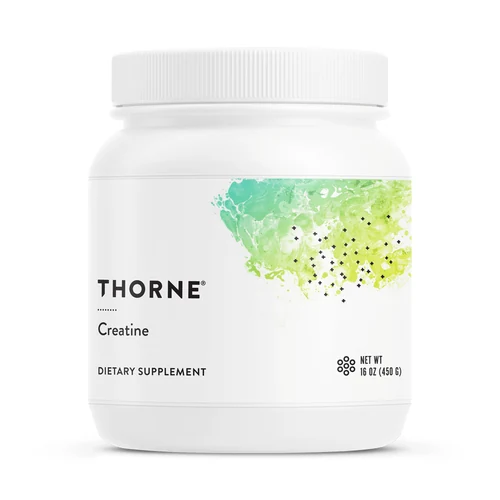
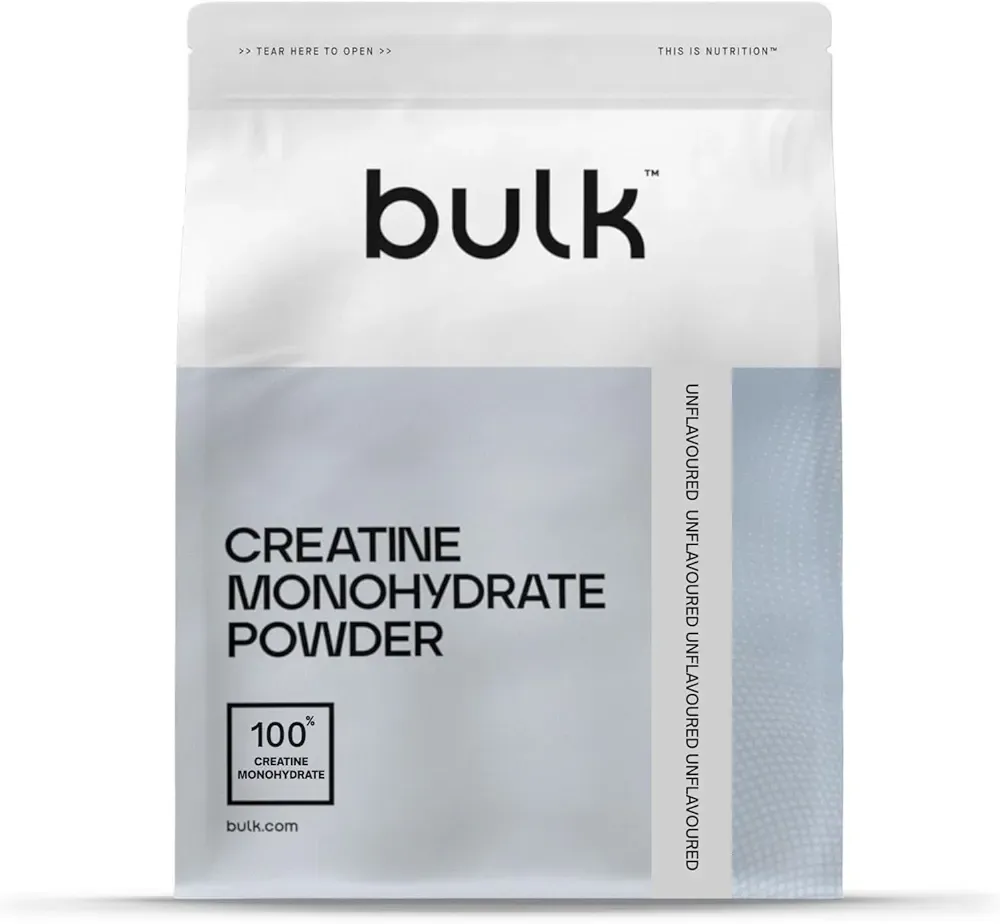
At $28 for 75 servings at 750mg each, the per-serving cost of $0.37 is reasonable for the HCl form. The honest cost analysis is per gram of active creatine: $0.37/0.66g creatine = ~$0.56/g creatine. BulkSupplements creatine monohydrate costs approximately $0.02/g creatine. Thorne (NSF Certified) costs approximately $0.10/g creatine. The HCl premium is real and substantial on a per-creatine-gram basis.
If the "750mg equals 5g" claim were validated by independent RCT, the economics would be very different. Without that validation, this is expensive creatine with an excellent solubility profile.
Who Should Buy / Who Should Skip
Buy if
You have experienced genuine GI issues (bloating, cramping, osmotic distress) with creatine monohydrate loading doses
You prefer a small-volume serving that dissolves completely in minimal liquid
You compete in a drug-tested sport and need Informed Sport certification
You specifically prioritise mixability over cost efficiency
Skip if
You have no GI issues with monohydrate — the solubility advantage is the only real differentiator
You want the strongest evidence base available — every clinical creatine study uses monohydrate
Budget matters — monohydrate gives identical performance at a fraction of the cost per gram
Ingredient Analysis
Ingredient
Dose per serving
Clinical range
Evidence
Creatine HCl (CON-CRET® Patented)
750mg (~660mg active creatine)
N/A (no RCT-established equivalent dose)
Moderate
🔬 Ingredient Deep Dive — Full Research Analysis+
Creatine HCl (CON-CRET®)
Creatine Hydrochloride · Vireo Systems patent · ~88% creatine by weight
Superior Solubility — ProvenPatented ManufacturingPerformance Equivalence — Unproven
Dose
750mg
Active creatine
~660mg
Solubility vs mono
~60× higher
GI tolerance
Excellent
What the HCl Modification Does
Creatine hydrochloride is produced by reacting creatine with hydrochloric acid to form a salt. This dramatically increases water solubility — creatine HCl dissolves in approximately 1/6th the water volume required for creatine monohydrate. The improved solubility reduces the osmotic load in the gastrointestinal tract, which is the primary mechanism behind reduced bloating and GI discomfort. It also means the supplement mixes completely in a shot-glass of water with no grittiness or residue.
The Evidence Gap
No published, independent, peer-reviewed RCT has compared muscle biopsy phosphocreatine levels between equal-time users of 750mg creatine HCl and 5g creatine monohydrate. The available comparative data comes primarily from urinary creatine excretion studies (manufacturer-funded) and in vitro solubility measurements. These are suggestive but do not confirm equivalent muscle loading — which is the actual performance-relevant outcome. The ISSN has not updated its creatine position stand to recommend HCl over monohydrate as of 2024.
Kaged Creatine HCl occupies a specific and legitimate niche: the superior mixability and GI tolerability product in the creatine category. For a meaningful subset of creatine users — those who experience bloating, cramping, or osmotic GI discomfort with standard monohydrate loading — the HCl form removes the barrier to supplementation entirely. That is a real and valuable outcome. For the majority of users who tolerate monohydrate without issue, it is an expensive solubility upgrade with no performance evidence advantage over a much cheaper alternative.
Real-World Testing — Jake's Personal Log
Testing Protocol
8 weeks · Jake Reynolds, CISSN
Duration
8 weeks
Dose Tested
750mg/day (label dose)
Application
GI tolerability + performance comparison vs prior monohydrate use
Measurement
Subjective GI scoring, strength tracking, mixability observation
1
Mixability and GI tolerance: the real differentiator
✓ Genuinely Superior
Protocol
750mg daily in 4oz water, taken post-workout.
Comparison
Previous 6 months on 5g creatine monohydrate daily.
Result
Complete dissolution in 4oz water — no residue, no texture. Zero GI discomfort at any point in 8 weeks.
This is where Kaged Creatine HCl genuinely delivers. The solubility difference is immediately obvious — the powder disappears into a small amount of liquid completely. Compared to the minor grittiness of even micronized monohydrate, the HCl experience is cleaner and more convenient. For users who found monohydrate loading (20g/day for 5 days) produced uncomfortable bloating, the HCl form removes that obstacle entirely.
2
Performance comparison to prior monohydrate period
~ Indistinguishable Performance
Protocol
8 weeks at 750mg/day HCl. Compared vs 8-week monohydrate period on identical training split.
Measurement
Compound lift totals, training volume capacity.
Result
No statistically meaningful performance difference detectable between the two periods within normal training variance.
As the evidence predicts: creatine performance is creatine performance. Whether the 750mg HCl achieved equivalent phosphocreatine saturation to previous 5g monohydrate protocols is impossible to confirm without muscle biopsy, but the functional training output was indistinguishable. This is consistent with what the solubility/absorption data would suggest, but does not constitute independent confirmation of the manufacturer's equivalence claim.
Overall Testing Observation
Kaged Creatine HCl delivered a genuinely better mixing and GI experience than monohydrate. Performance was indistinguishable from prior monohydrate use — consistent with both the manufacturer's claims and the null hypothesis (that the HCl form, while differently absorbed, ultimately produces sufficient creatine muscle loading for performance benefit). The case for this product rests entirely on GI tolerability and mixability convenience — not on performance superiority.
Dosing Protocols
Follow the label protocol of 750mg once daily. Unlike monohydrate, Kaged recommends no loading phase.
Use Case / Condition
Recommended Dose
Evidence Level
Daily maintenance (label recommendation)
750mg once daily (1 scoop)
Moderate
Those who want monohydrate-equivalent guarantee
3–5g creatine monohydrate daily — more evidence
Strong
GI-sensitive users — this product's core use case
750mg HCl daily; no loading required
Moderate
Side Effects & Drug Interactions
⚠ Potential Side Effects
Generally excellent GI tolerability — this is the main argument for HCl over monohydrate
No significant adverse effects reported in clinical usage at 750mg–1,500mg/day
Mild water retention in muscle tissue is expected (same as monohydrate — this is the desired effect)
💊 Drug & Supplement Interactions
Same kidney cautions as all creatine forms — consult physician if pre-existing kidney disease
Informed Sport certified — minimal contamination risk for competitive athletes
Frequently Asked Questions
For GI tolerability and mixability: yes, meaningfully better. For performance outcomes: not demonstrated by independent RCT. If you tolerate monohydrate without GI issues, there is no evidence-based reason to pay more for HCl.
The claim is that HCl's superior bioavailability means a smaller dose achieves equivalent muscle creatine loading. This is plausible based on solubility data but has not been confirmed by an independent muscle biopsy study comparing the two forms. The ISSN continues to recommend creatine monohydrate as the reference form.
Yes. Kaged has a strong industry reputation for manufacturing quality, transparent labelling, and third-party testing (Informed Sport certified across their range). The brand quality is not in question — only the specific efficacy claim for the HCl form versus monohydrate at equal dosing protocols.
Kaged Creatine HCl is a well-manufactured product with a real and meaningful advantage in GI tolerability and mixability. The CON-CRET® patented form, Informed Sport certification, and Kaged's quality standards are all solid. The honest limitation is that the "750mg equals 5g monohydrate" performance claim lacks independent peer-reviewed validation via the gold standard measure (muscle biopsy phosphocreatine). This product earns a 7.8 rather than higher not because of quality issues, but because the evidence base for the central performance claim doesn't match the 30-year RCT record of creatine monohydrate.
Best for
Creatine users who specifically experience GI intolerance with monohydrate, athletes who prioritise minimal-volume clean dissolution, competitive drug-tested sport participants who need Informed Sport certification.
Skip if
Anyone without GI issues with monohydrate — plain creatine monohydrate gives the same or stronger evidence-based performance at significantly lower cost.
For the evidence gold standard in creatine, see our
Kreider RB et al. (2017). ISSN position stand: creatine supplementation in exercise, sport, and medicine. JISSN.DOIPubMed
Darrabie MD et al. (2011). AMPK and substrate availability regulate creatine transport in cultured cardiomyocytes. American Journal of Physiology.DOIPubMed